

The global textile and apparel manufacturing industry generates massive, heterogeneous streams of waste materials, ranging from pre-consumer manufacturing offcuts and defective yarn spools to post-consumer synthetic garments, heavy denim, multi-layer technical textiles, and wool blends. Unlike homogenous industrial plastics or clean scrap metal, textile waste presents a unique physical challenge due to its highly variable composition, extreme tensile elongation, and propensity for fiber coiling. Standard off-the-shelf shredding equipment frequently fails when confronted with these difficult natural and synthetic fabrics, resulting in shaft wrapping, thermal melting, and frequent maintenance bottlenecks.
Achieving reliable, high-uptime size reduction across diverse textile streams requires moving away from generic machinery toward tailored engineering. Designing custom rotary shredders involves fine-tuning rotor kinematics, cutting insert metallurgy, hydraulic feeding dynamics, and shaft sealing configurations to match specific fiber rheologies. This technical guide examines custom design parameters, low-shear cutting mechanics, anti-wrapping engineering, and plant integration strategies for processing difficult synthetic and natural fabrics.
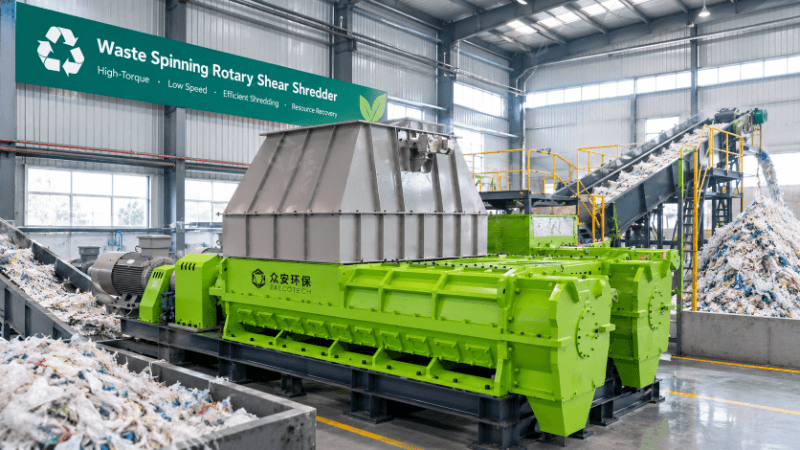
Every textile recycling facility handles a distinct feedstock profile. A generic shredder rarely delivers optimal performance because different fabrics impose vastly different mechanical demands:
Extreme Tensile Tenacity in Synthetics: Synthetic fibers like polyester, nylon, and elastane stretch significantly under mechanical stress, absorbing impact energy and resisting fracture unless subjected to a precise scissor-type shear.
Abrasive Blends and Natural Fibers: Cotton, wool, and jute contain natural grit, mineral dyes, and abrasive sizing agents that accelerate tool wear, requiring customized high-chromium alloy tool steels.
Varying Bulk Densities and Bridging: Loose fluffy yarn waste, baled garments, and heavy fabric rolls possess entirely different volume-to-weight ratios, necessitating customized hydraulic pusher ram configurations and hopper volumes.
Thermal Frictional Vulnerability: Low-melting-point synthetic filaments melt rapidly under continuous friction, fusing into gummy masses if rotor speeds, micro-gaps, and thermal isolation systems are not precisely calibrated.
Engineered recycling systems are tailored through specific design modifications to match the exact physical characteristics of the target textile waste stream:
Depending on whether the facility processes fine technical yarns or heavy multi-layer denim, engineers customize the rotor diameter, knife pocket spacing, and rotational speeds (ranging from 60 to 90 RPM) via high-reduction planetary gearboxes to optimize the cutting angle and torque delivery.
To prevent material bridging and ensure consistent feeding of voluminous or heavy baled textiles, custom shredders feature variable-stroke hydraulic pusher rams controlled by real-time PLC motor load telemetry, ensuring steady material densification against the cutting drum.
The primary defense against shaft wrapping and lint migration is customized end-plate isolation. Custom shredders integrate multi-stage grease-purged labyrinth seals and mechanical deflector plates between the cutting chamber and outboard bearing housings, completely blocking fine fibers and moisture.
Curved perforated sizing screens (ranging from 15 mm to 50 mm) are custom-engineered with optimized hole geometries and hydraulic drop-down cradles, ensuring that shredded textile flakes achieve the exact particle size required for downstream opening or carding equipment.
The table below summarizes cutting precision, wrapping risk, adaptability, and operational performance across generic shredding platforms versus custom-engineered rotary shear shredders:
| Performance Metric | Standard Off-the-Shelf Shredder | Custom-Engineered Rotary Textile Shredder |
|---|---|---|
| Feedstock Adaptability | Rigid universal design; struggles with variable textile elasticity and bulk. | Tailored Design (Optimized specifically for target natural or synthetic fiber blends). |
| Shaft Wrapping & Thermal Risk | High (Prone to fiber coiling, friction buildup, and thermal melting). | Low (Precision micro-gaps, sealed shafts, and low-speed shear prevent binding). |
| Tool Life & Metallurgy | Standard tool steels subject to rapid abrasive wear from dyes and grit. | Hardened D2/DC53 Steels with Tungsten Inlays for extended operational uptime. |
| Maintenance Accessibility | Difficult screen and blade access causing extended downtime. | Hydraulic Tilting Cradles and Indexable Inserts for rapid maintenance. |
Processing abrasive textile dyes, finishing chemicals, and accidental metal fasteners mixed into waste fabrics subjects internal components to continuous sliding friction and impact shock:
Vacuum-Hardened D2 / DC53 Tool Steels: Cutting inserts and bed knives are forged from high-carbon, high-chromium tool steels heat-treated to 56–58 HRC, ensuring long service life and edge retention under continuous multi-shift operation.
Four-Way Indexable Cutting Inserts: Square concave cutters can be rotated 90 degrees when an edge shows wear, multiplying usable blade service life fourfold before requiring workshop regrinding or replacement.
Hardox 500 Chamber Armoring: Internal sidewalls, feed hoppers, and screen cradles are lined with bolted, replaceable Hardox 500 wear plates, protecting the structural chassis from abrasive scouring.
Outboard Bearing Isolations: Heavy-duty spherical roller bearings are housed externally in split plummer blocks separated from the cutting chamber by an open air gap and multi-stage grease-purged labyrinth seals.
A custom-engineered textile recycling facility integrates the rotary shredder into a synchronized processing line to ensure a smooth transition from waste to valuable fiber output:
Stage 1: Bulk Waste Reception and Metering: Bales of post-consumer garments, industrial fabric offcuts, or yarn waste are unloaded, sorted for metallic contamination, and loaded onto heavy-duty slat conveyors.
Stage 2: Precision Custom Rotary Shear Shredding: The tailored hydraulic pusher ram feeds material into the low-speed rotary shear, cleanly slicing textiles against bed knives and passing them through calibrated bottom sizing screens.
Stage 3: Pneumatic Conveying and Fiber Opening: Sized textile flakes and fluff are captured by negative-pressure hoods, pneumatically conveyed past cross-belt magnets to remove tramp metal, and fed directly into downstream opening or carding lines.
Operating heavy industrial machinery under continuous multi-shift schedules requires robust safety interlocks and automated protection systems:
Intelligent Reversing Drivetrains: If an uncrushable heavy metal object enters the cutting zone, the central PLC detects the electrical torque spike within milliseconds and executes an automatic reverse cycle to clear the obstruction, preventing drive damage.
Enclosed Dust and Lint Collection: Connecting all discharge chutes to a negative-pressure pulse-jet baghouse filtration system captures fine airborne fiber lint, maintaining a clean, safe working environment.
Hydraulic Access and Screen Cradles: Hydraulic cylinders tilt down the screen cradle effortlessly during routine maintenance, allowing technicians to inspect and swap screen meshes or rotate cutting inserts rapidly.
Successfully recycling difficult synthetic and natural fabrics requires moving away from rigid, generic machinery toward customized mechanical engineering. Designing custom rotary shredders—tailored with application-specific rotor geometries, active hydraulic pusher rams, low-speed high-torque rotary shear cutting, and multi-stage labyrinth shaft seals—solves the persistent challenges of shaft wrapping, thermal melting, and inconsistent particle sizing. This robust engineering approach ensures high operational uptime, low maintenance overhead, and pristine feedstock preparation for advanced textile recycling facilities.


 中文
中文


