

How much does an industrial shredder cost? There is no single price because industrial shredders are configured according to the material, required capacity, output size, machine structure, and downstream application. A shredder for soft textile waste may require a very different configuration from one processing fiberglass, bulky waste, or other abrasive industrial materials.
For buyers, the better approach is to understand what determines the equipment cost before comparing quotations. This helps avoid both over-configured equipment and low-cost machines that cannot meet the required processing conditions.
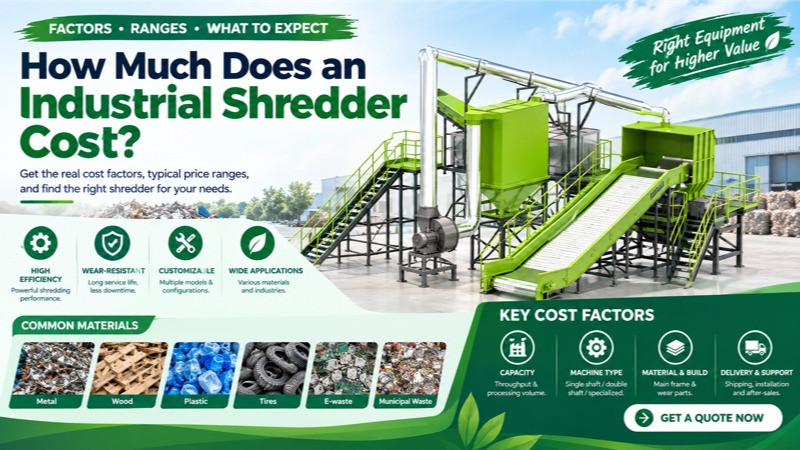
Several factors directly affect the cost of an industrial shredder:
Material type: Hard, abrasive, bulky, or difficult-to-process materials may require stronger components and wear-resistant cutters.
Processing capacity: Higher throughput generally requires larger cutting chambers, stronger drive systems, and higher equipment specifications.
Output size: Smaller and more controlled output may require different cutting configurations or secondary processing.
Machine type: Twin-shaft, single-shaft, fine shredders, and specialized machines have different structures and applications.
Automation: PLC control, overload protection, automatic reversing, monitoring, and other functions can increase the equipment configuration.
Complete-line requirements: Conveyors, screens, magnetic separators, dust collection, and other auxiliary equipment add to the total project investment.
Therefore, comparing only the machine price without checking the configuration can make different quotations difficult to evaluate fairly.
Industrial waste covers a wide range of materials, so the shredder must be selected according to the actual feedstock.
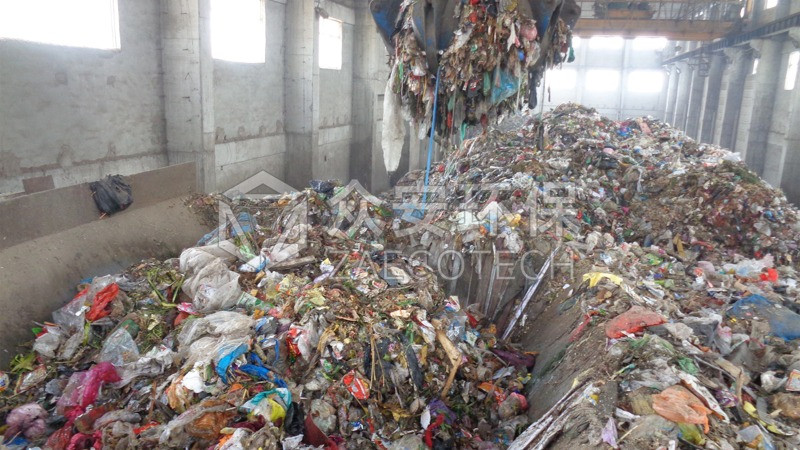
ZAECOTECH's industrial waste shredder is designed for materials including glass fiber, textile scraps, leather scraps, FRP, and decommissioned wind turbine blades. The equipment is also positioned for complex industrial waste pretreatment and resource recovery applications.
| Material | Typical Processing Purpose |
|---|---|
| Textile scraps | Size reduction / recycling |
| Leather scraps | Waste volume reduction |
| Glass fiber | Composite waste pretreatment |
| FRP | Size reduction and recycling |
| Wind turbine blades | Blade pretreatment |
| Bulky industrial waste | Volume reduction |
| Mixed industrial waste | Pretreatment / RDF preparation |
Material characteristics are important when calculating equipment cost. For example, abrasive fiberglass and FRP may require more wear-resistant cutting components, while long or flexible materials may require a configuration designed to reduce wrapping and feeding problems.
Output size is another major factor in both machine selection and project cost.
ZAECOTECH's industrial waste shredder has a reference output range of 50–200 mm, with different models designed for different processing capacities.
| Model | Capacity | Reference Output |
|---|---|---|
| A6W/120 | 10–20 m³/h | 50–200 mm |
| A9W/160 | 20–35 m³/h | 50–200 mm |
| A12W/180 | 30–45 m³/h | 50–200 mm |
| A15W/180 | 45–60 m³/h | 50–200 mm |
If the final application requires finer or more uniform material, a secondary shredder, crusher, grinder, or screening system may be required.
This is why buyers should define the target output size according to the downstream process, rather than simply asking for the smallest possible particle size.
For example, material prepared for sorting may have different size requirements from material prepared for RDF, fuel production, or further grinding.
Capacity is one of the most important factors affecting equipment selection.
A small recycling facility may only need a lower-throughput machine, while a large industrial waste or RDF project may require continuous high-capacity processing.
ZAECOTECH's industrial waste shredder range covers approximately 10–60 m³/h, with models progressively increasing in capacity.
| Capacity | Typical Project Requirement |
|---|---|
| 10–20 m³/h | Small or medium waste processing |
| 20–35 m³/h | Medium industrial waste projects |
| 30–45 m³/h | Higher-throughput processing |
| 45–60 m³/h | Large industrial applications |
Higher capacity generally requires greater equipment investment, but higher capacity does not automatically mean a better solution.
If the machine is significantly oversized, the buyer may pay for unused capacity. If it is undersized, the shredder can become a bottleneck in the production line.
The appropriate capacity should therefore be calculated from the actual material supply, working hours, feeding method, and required daily throughput.
A higher equipment cost often reflects specific technical configurations rather than simply a larger machine.
ZAECOTECH's industrial waste shredder uses a low-speed shredding system with tearing and shearing between cutters. The equipment includes a cutting chamber, motor, gearbox, frame, and intelligent operation and maintenance control system.
Important features to consider include:
This type of drive configuration is suitable for bulky and difficult solid waste where strong shearing force is required.
Materials such as fiberglass and FRP can be abrasive, making cutter durability an important consideration for long-term operation.
A suitable control system can help monitor machine operation and provide protection during abnormal loading conditions.
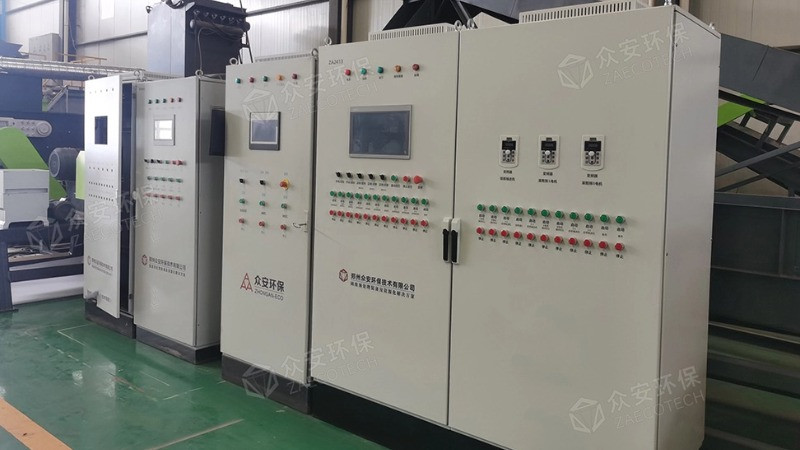
The shredder can be integrated with feeding, conveying, screening, separation, and other downstream equipment rather than operating as an isolated machine.
Different material types, capacities, output requirements, and site conditions may require different equipment configurations.
These factors should be included when comparing quotations because two machines with similar nominal capacity may have significantly different configurations.
An accurate quotation requires more than simply providing the word “industrial waste.”
Buyers should provide the following information:
| Required Information | Why It Matters |
|---|---|
| Material type | Determines machine configuration |
| Material condition | Affects feeding and processing |
| Input size | Determines feeding requirements |
| Required capacity | Determines machine model |
| Target output size | Determines cutting configuration |
| Moisture content | Influences actual throughput |
| End use | Determines downstream equipment |
| Site conditions | Affects system layout |
For example, a customer processing 10 t/h of textile waste to 100 mm may need a different solution from a customer processing 40 t/h of abrasive FRP waste.
The final quotation may also need to include conveyors, feeding systems, screens, magnetic separators, dust collection, electrical controls, installation, or other auxiliary equipment depending on the project.
ZAECOTECH provides customized industrial shredding solutions based on material type, required capacity, output size, and site conditions. The company also states that its industrial shredders have a 12-month warranty covering non-human damage and manufacturing defects, with technical support and optional on-site engineering support available.
In short, the cost of an industrial shredder should be evaluated as part of the complete processing requirement rather than as a single machine price. By clearly defining the material, capacity, output size, and end use, buyers can obtain a more suitable configuration and a more accurate quotation.


 中文
中文


