

Choosing the right tire shredder for TDF production is an important step in turning waste tires into alternative fuel for industrial applications. For tire recycling operators and fuel producers, the main challenges go beyond reducing tire size. Tough rubber, embedded steel wires, different tire dimensions, and downstream fuel specifications all affect the choice of shredding equipment.
An industrial tire shredder reduces bulky scrap tires into smaller rubber chips that are easier to convey, store, and process further. Depending on the target fuel specifications, the shredding system may also need screening, magnetic separation, or secondary size reduction to prepare tire-derived fuel (TDF) feedstock.
So, what should producers consider when selecting a tire shredder? The key is to match the machine's processing capacity, output size, and cutting performance with the actual waste tires and the requirements of the fuel user.

Waste tires are challenging to process because their rubber is elastic and their structures often contain steel-wire reinforcement. Passenger car tires, truck tires, and other tire types also vary in size and construction, making stable processing an important consideration.
Common challenges include:
High rubber elasticity: Tires can deform under pressure, so effective tearing and shearing are important for reducing their size.
Embedded steel wires: Steel reinforcement increases cutting resistance and may require additional separation before the shredded material can be used.
Different tire dimensions: Mixed tire feedstock can affect feeding efficiency and processing consistency.
Specific fuel-size requirements: Cement kilns and other industrial combustion facilities may require particular particle sizes to suit their feeding systems.
Wear and maintenance: Continuous processing of tough, steel-reinforced tires places demands on cutter durability and equipment maintenance.
These factors mean that choosing a tire shredder is not simply a matter of selecting the highest motor power. Producers should consider the cutting mechanism, expected throughput, maintenance requirements, and compatibility with the downstream TDF preparation process.
The ideal output size depends on the fuel specifications and feeding equipment used by the receiving facility. Cement kilns and other industrial combustion systems may have different requirements for fuel dimensions, material consistency, and acceptable metal content.
For primary tire shredding, ZAECOTECH's industrial tire shredder can produce tire chips in the 50–120 mm range. This provides a practical starting point for evaluating equipment for TDF feedstock preparation.
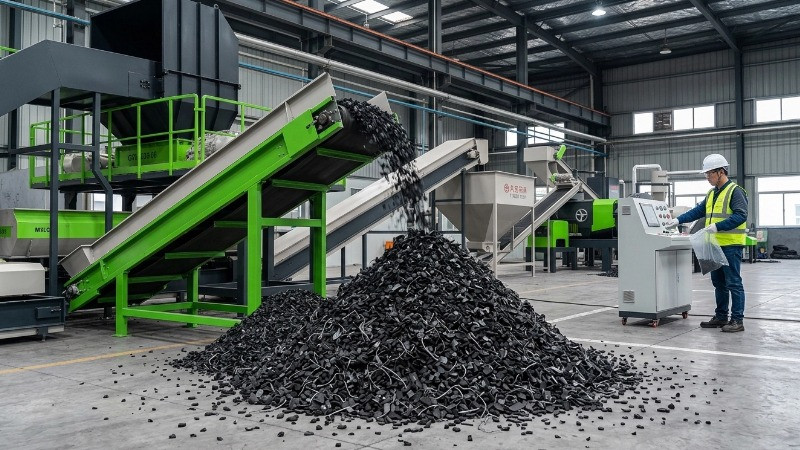
However, this size range is not suitable for every application by default. Before selecting a machine, producers should confirm:
The maximum and preferred particle size accepted by the fuel user.
Whether the shredded tires can be fed directly into the combustion system.
Whether screening or secondary shredding is needed to achieve the target size distribution.
Whether steel-wire separation or other treatment is required.
If the downstream process requires smaller or more consistent particles than the primary shredder produces, additional processing may be necessary. The final configuration should therefore be based on the fuel user's specifications rather than output size alone.
The required capacity depends on waste tire availability, operating hours, production targets, and the processing capacity of downstream equipment.
ZAECOTECH's tire shredder range covers a general capacity span of 2–20 t/h, with a published power range of 160–315 kW. The product range also includes several models with different reference capacities:
| Model | Reference Capacity | Reference Output Size |
|---|---|---|
| T60 | 1.5–2 t/h | 50–120 mm |
| T80 | 2–3 t/h | 50–120 mm |
| T100 | 4–6 t/h | 50–120 mm |
| T120 | 6–8 t/h | 50–120 mm |
These figures are reference specifications rather than guaranteed results under all operating conditions. Actual throughput depends on tire type, feeding conditions, material dimensions, and target output size. The overall product-range capacity should not be interpreted as the capacity of every individual model.
When planning a TDF production line, consider four factors:
1. Feedstock supply: Estimate the average and peak quantity of waste tires available.
2. Operating schedule: Calculate the hourly processing rate needed to meet daily or monthly production targets.
3. Downstream capacity: Conveyors, screens, separators, and fuel-feeding systems must be able to handle the shredder's output.
4. Future expansion: If tire supply is expected to increase, consider whether the line can be expanded without replacing the entire system.
A properly balanced line is generally more effective than choosing the largest machine available. Matching the shredder with the rest of the process helps reduce bottlenecks and supports stable operation.
For TDF production, the equipment needs to handle tough rubber and steel-reinforced structures while delivering material suitable for the next processing stage.
ZAECOTECH's tire shredder uses a tearing-and-shearing principle with a blade structure designed for tire processing. This approach is intended to handle the elasticity and reinforcement found in waste tires, including passenger car tires, motorcycle tires, and truck tires.
Tires place different demands on cutting equipment than ordinary plastic waste. A suitable blade configuration helps engage and tear the material effectively, supporting the size-reduction process.
Primary-shredded tire chips can be conveyed for screening, steel separation, or secondary shredding, depending on the target fuel specifications. The need for these additional stages should be determined by the requirements of the receiving facility.
Not every TDF plant requires the same equipment arrangement. Some facilities may only need primary shredding, while others require conveying, screening, magnetic separation, or an additional size-reduction stage.
The most suitable solution is not necessarily the machine with the highest power rating. It is the configuration that processes the available tires at the required throughput and produces material that meets the next stage's requirements.
A tire shredder is usually the core size-reduction unit in a TDF preparation system. Depending on the required fuel specifications, the complete line may include several additional stages.
A typical process flow is:
Waste tires → Feeding and conveying → Primary tire shredding → Screening or secondary shredding, if required → Metal separation, if required → TDF feedstock delivery
Each stage serves a specific purpose:
Feeding and conveying: Move tires into the shredder and transfer the output to subsequent equipment.
Primary shredding: Reduce bulky tires into smaller rubber chips.
Screening or secondary shredding: Adjust particle size when the primary output does not meet the target specification.
Metal separation: Remove steel when required by the downstream process and fuel user.
Fuel delivery: Transfer the prepared material to storage, further processing, or the industrial fuel-feeding system.
This is a general process reference, not a mandatory configuration for every project. A facility that accepts primary-shredded tire chips may not need the same downstream equipment as a plant that requires smaller and more uniform particles.
Before finalizing the line, producers should confirm the target fuel size, acceptable residual metal content, required throughput, available installation space, and interfaces with downstream equipment.
The right equipment configuration depends on project scale, available feedstock, and the requirements of the final fuel user. Smaller projects may prioritize a system that matches their actual tire supply, while larger facilities may require higher throughput and more extensive downstream processing.
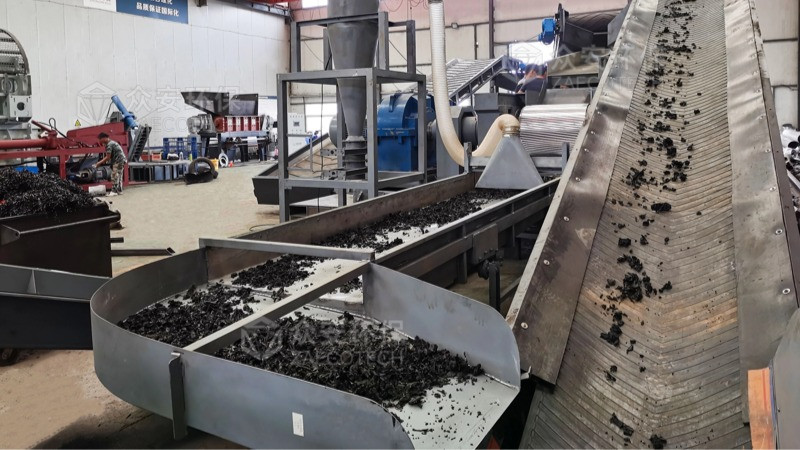
ZAECOTECH's used tire recycling project in Indonesia provides a practical example of industrial waste tire processing. The published project information identifies waste tires and scrap rubber as the materials, with a processing capacity of 2 t/h and applications in resource recovery and TDF production.
This project offers a reference for evaluating tire recycling and TDF preparation at a 2 t/h processing scale. It does not mean that every project requires the same configuration or will achieve identical output specifications.
For an effective equipment recommendation, several project details need to be considered together:
Tire type: Passenger car tires, truck tires, mixed tires, or other rubber waste.
Target capacity: Required hourly throughput and expected operating hours.
Output size: Particle-size range required by the fuel user.
End application: Cement kiln co-processing or another industrial fuel system.
Metal requirements: Whether steel-wire separation is needed and what residual metal content is acceptable.
Site conditions: Available space, feeding method, power supply, and integration requirements.
Considering these factors helps determine the appropriate shredder model and whether additional conveying, screening, separation, or secondary processing equipment is necessary.
Selecting a tire shredder for TDF production means balancing processing capacity, output size, tire construction, and the requirements of the downstream fuel system. These factors should be evaluated together rather than independently.
With an output range of 50–120 mm and multiple capacity options, ZAECOTECH's industrial tire shredding equipment provides a starting point for different waste tire processing projects. Its Indonesia project, with a processing capacity of 2 t/h, also demonstrates how tire recycling equipment can be applied to resource recovery and TDF preparation.
Before making a purchase decision, confirm the target fuel specifications and determine whether primary shredding alone will be sufficient. A well-matched system can improve material handling, prepare feedstock for further processing, and help reduce avoidable bottlenecks.
Whether you are planning a new TDF production line or upgrading an existing facility, the right shredding solution starts with understanding the available tires, production targets, and downstream requirements. ZAECOTECH can help evaluate these factors and develop an equipment configuration suited to your project.


 中文


