

Rapid urban population growth and evolving consumption patterns have made municipal solid waste (MSW) management one of the most critical environmental and economic challenges for local governments and private operators worldwide. Traditional disposal routes—predominantly unlined landfills and uncontrolled mass-burn incineration—are increasingly restricted by stringent environmental mandates, rising tipping fees, escalating carbon taxation, and finite land capacity. Landfilling untreated waste not only generates potent fugitive methane emissions and toxic leachate plumes but also permanently buries valuable secondary resources.
To establish a truly sustainable, closed-loop urban infrastructure, forward-thinking municipalities and waste management enterprises are investing in high-capacity, mechanized processing facilities. Designing and operating advanced municipal solid waste plants equipped with automated mechanical, aerodynamic, and sensor-based sorting lines allows operators to achieve unprecedented landfill diversion rates exceeding 85% to 90%. This comprehensive technical guide delivers an engineering blueprint for establishing a modern municipal solid waste plant, covering feedstock composition, multi-stage sorting equipment, material recovery balances, and circular revenue streams.
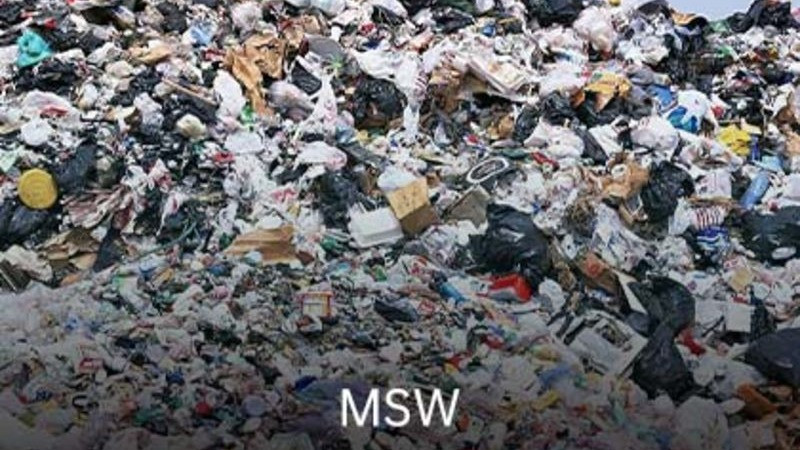
Municipal solid waste is inherently complex, exhibiting wide variations in bulk density, moisture levels, and material geometry based on regional collection practices, climate, and local recycling infrastructure. A commercial municipal solid waste treatment plant must be engineered to isolate and process five primary material streams:
Organic & Biodegradable Fractions (30%–50% by weight): Comprising post-consumer food waste, spoiled produce, and green garden trimmings. These fractions carry moisture contents between 50% and 75%, requiring rapid mechanical separation to prevent contamination of dry recyclables and avoid biological odor generation.
High-Calorific Combustibles (25%–40% by weight): Flexible packaging films (PE/PP), laminated pouches, non-recyclable multi-layer textiles, foam packaging, and clean wood scrap suitable for transformation into high-grade Refuse-Derived Fuel (RDF) or Solid Recovered Fuel (SRF).
Rigid Recyclable Polymers (8%–15% by weight): High-value post-consumer plastics including PET bottles, HDPE milk jugs/detergent containers, PP tubs, and thermoformed packaging.
Ferrous and Non-Ferrous Metals (3%–6% by weight): Steel food cans, automotive fasteners, wire, aluminum beverage cans (UBC), and extruded aluminum window framing.
Inert Heavy Minerals & Cullet (5%–12% by weight): Broken bottle glass, ceramic tile shards, construction stones, concrete rubble, and fine road sand.
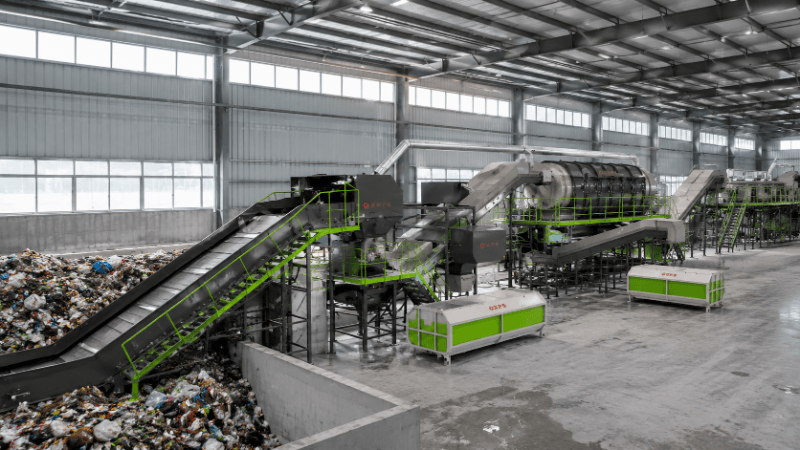
Achieving high recovery rates without excessive manual picking requires an integrated sequence of rugged mechanical sizing units, density classifiers, electromagnetic extractors, and automated optical sensors.
Inbound MSW arrives in compacted compactor trucks and is unloaded onto deep reception pits or heavy-duty steel plate apron feeders. The material enters a low-speed, high-torque rotary bag opener. Unlike high-speed shredders that pulverize glass bottles and smash wet food waste into dry paper fibers, the bag opener uses wear-resistant ripper teeth to cleanly slice polyethylene garbage bags open, liberating the internal contents intact for downstream optical and ballistic classification.
To liberate intertwined waste items, break down bulky cardboard packaging, and flatten large hollow items without creating airborne dust, the stream passes through a heavy-duty double-shaft MSW shredder. Operating at low rotational speeds (12 to 22 RPM) with independent planetary gear drives, counter-rotating alloy cutting discs shear oversized carpet rolls, mattresses, and plastic crates down to uniform 150 mm to 300 mm lengths.
Mechanical screening separates waste into calibrated particle size fractions to optimize downstream sorting efficiency:
Rotary Trommel Screens: Heavy-duty inclined rotating perforated drums equipped with internal tumbling lifters divide the stream into multiple size cuts (e.g., < 60 mm organic/inert underflow, 60–250 mm mid-size container fraction, and > 250 mm oversized 2D film/cardboard overflow).
Non-Wrapping Disc / Dynamic Star Screens: Dynamic spinning shafts scalp out flexible films and fibrous cardboard, preventing material wrapping and ensuring an even, non-overlapping bed depth across downstream sorting belts.
The mid-size fraction (60–250 mm) is fed onto an inclined ballistic separator. Dynamic crankshaft-driven paddles agitate the waste bed, splitting the stream into three physical fractions simultaneously:
Rolling 3D Fraction: Rigid containers, plastic bottles, steel cans, and aluminum containers bounce downward along the inclined paddles toward optical and magnetic sorting conveyors.
Flat 2D Fraction: Flexible plastic films, paper, cardboard, and lightweight textiles climb upward along the paddles toward the RDF preparation circuit.
Fine Underflow Fraction: Residual sand, micro-plastics, and broken glass grit fall through paddle perforations for secondary mineral processing.
Air classification exploits aerodynamic drag and specific gravity differentials. High-pressure air knives fluidize the feed stream inside a sealed zig-zag or rotary drum chamber, lifting lightweight films, clean paper, and foam packaging into an expansion cyclone while heavy inerts (structural timber, rigid PVC pipes, stones, wet shoes, and metals) drop by gravity into a reject bin.
Metal extraction is completely automated across continuous conveyor trajectories:
Self-Cleaning Overband Magnetic Separators: High-gradient permanent neodymium cross-belt magnets continuously extract ferrous steel cans, structural iron, and scrap metal, protecting downstream fine shredders.
High-Frequency Eddy Current Separators (ECS): High-speed alternating magnetic rotors (2,500–3,000 RPM) induce localized eddy currents within non-ferrous metals, generating repulsive Lorentz forces that cleanly launch aluminum cans, copper wiring, and brass fittings away from inert residues.
Precision classification of polymers and fibers is handled by advanced sensor systems:
Near-Infrared (NIR) Optical Sorters: Advanced hyperspectral cameras scan the material bed at speeds up to 3 m/s, identifying the molecular spectral signatures of PET, HDPE, PP, PS, and cardboard within milliseconds. High-speed pneumatic valve manifolds (64 to 128 micro-nozzles) fire targeted compressed air jets to eject selected materials into recovery hoppers with purities exceeding 95%.
AI-Driven Delta Pick-and-Place Robots: High-speed robotic arms guided by deep-learning vision models perform high-precision quality control, removing residual contaminants or extracting specialized commodities at rates up to 80–100 picks per minute.
The operational layout of a continuous 20 to 50 ton-per-hour advanced municipal solid waste plant integrates these specialized mechanical subsystems into a streamlined, high-throughput material flow:
| Processing Zone | Primary Machinery Involved | Material Separation Function | Target Output Stream |
|---|---|---|---|
| Reception & Metering | Plate apron feeder, dual-rotor bag opener | Controlled feed metering, tears garbage sacks without glass breakage | Liberated mixed municipal bulk |
| Primary Volume Reduction | Heavy-duty double-shaft shredder | Low-speed, high-torque shearing of bulky and oversized items | Coarse fraction (150–300 mm) |
| Size & Organic Scalping | Multi-deck rotary trommel screen | Separates wet organic fines and glass grit from recyclable packaging | < 60 mm Organics (to Anaerobic Digestion) |
| 2D / 3D Ballistic Sorting | Multi-paddle ballistic separator | Separates rigid rolling containers (3D) from flexible films/fibers (2D) | Split 3D container & 2D film lines |
| Ferrous & Non-Ferrous Line | Overband magnet & Eddy Current Separator | Continuous automated extraction of magnetic steel and non-ferrous aluminum | Clean ferrous scrap & clean UBC aluminum |
| Aerodynamic Density Line | Closed-loop zig-zag windshifter | Lifts light packaging away from heavy inert stones and dense PVC | Purified light RDF precursor fraction |
| High-Purity Optical Sorting | Multi-channel NIR optical sorters | Automated spectral identification and pneumatic jet ejection of polymers | Baled PET, HDPE, and PP resins (> 95% purity) |
| Secondary Fine Size Reduction | Single-shaft RDF fine shredder with screen | Precision calibrated fine shearing for industrial boiler/cement kiln injection | Homogeneous < 30–50 mm RDF Fluff/Pellets |
An advanced municipal solid waste processing facility transforms an expensive solid waste liability into multiple profitable, commercial-grade revenue streams:
Refuse-Derived Fuel (RDF / SRF): High-calorific light plastics, textiles, and paper fractions are refined and sized into consistent 30–50 mm alternative fuels with lower heating values of 18 to 22 MJ/kg, replacing fossil coal in industrial cement kilns and waste-to-energy power plants.
High-Value Secondary Polymers: Mechanically sorted PET bottle flakes and HDPE/PP regrinds command premium commodity prices from bottle-to-bottle and plastics compounding reclaimers.
Circular Metals: Baled ferrous steel cans and eddy-current-sorted aluminum scrap are delivered directly to secondary smelters with near-zero contamination penalties.
Bio-Energy & Organic Compost: Screened organic fines (< 60 mm) pass into continuous anaerobic digestion (AD) reactors to generate green biomethane and high-nutrient organic soil conditioners.
Operating a continuous municipal waste processing facility requires comprehensive environmental and mechanical safeguards to ensure high machine uptime and protect facility personnel:
Negative-Pressure Odor & Dust Extraction: Tipping halls, trommel enclosures, and conveyor drop chutes are continuously ventilated under negative atmospheric pressure. Exhaust air passes through heavy-duty pulse-jet baghouse filters and multi-stage bio-trickling scrubbers with activated carbon beds, neutralizing fugitive dust and volatile organic compound (VOC) odors.
Automated Spark Detection and Fire Suppression: High-speed fine shredders and optical sorting conveyors are equipped with fast-acting infrared (IR) spark detectors paired with high-pressure nitrogen or micro-fog water mist suppression systems to extinguish friction sparks instantly.
Wear-Resistant Machine Armoring: Processing abrasive municipal grit, glass cullet, and road silt causes severe equipment wear. Shredder housings, transfer chutes, and trommel screen plates are armored with replaceable Hardox 500 wear plates and tungsten-carbide hardfaced cutter inserts to extend maintenance cycles.
Modernizing municipal solid waste management requires moving decisively away from passive landfill disposal toward high-efficiency automated recovery. Deploying an advanced municipal solid waste plant—combining low-speed shredders, rotary trommels, ballistic separators, magnetic/eddy current extractors, and NIR optical sorting systems—enables operators to consistently divert 85% to 90%+ of incoming waste from landfills. This industrialized approach cuts municipal carbon footprints, eliminates landfill liabilities, and recovers high-value secondary resources to power the global circular economy.


 中文


