

The global transition toward circular economies and net-zero industrial emissions has driven an explosive surge in waste-to-energy (WtE) investments. Cement kilns, industrial boilers, power plants, and municipal waste management facilities increasingly look to Refuse-Derived Fuel (RDF) as a reliable, high-calorific coal alternative. Produced from processed non-hazardous municipal solid waste, industrial packaging scraps, paper, textiles, and plastics, RDF transforms bulky refuse into standardized, high-density fuel pellets. However, engineering a dependable, high-throughput RDF pelletization line is exceptionally demanding. The raw material is abrasive, heterogeneous, and chemically complex, requiring robust equipment capable of continuous multi-shift operation.
Because pelletizing refuse-derived fuel places extreme mechanical and thermal stress on machinery, the success of a waste-to-energy project hinges almost entirely on equipment selection. Partnering with a qualified, experienced RDF pellet machine manufacturer ensures that plant operators receive durable extrusion systems designed specifically to withstand severe wear, deliver consistent throughput, and maintain strict environmental compliance. This technical guide examines RDF pellet rheology, ring-die extrusion kinematics, wear-resistant metallurgy, and key evaluation criteria for selecting the optimal RDF pellet machine manufacturer for industrial waste projects.
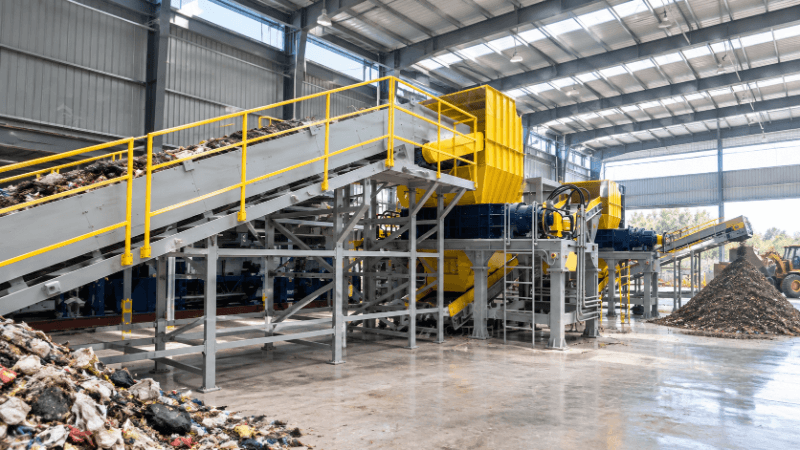
To understand what distinguishes an elite RDF pellet machine manufacturer from generic equipment suppliers, one must analyze the severe physical and chemical hurdles inherent in refuse-derived fuel:
High Abrasion and Silica Contamination: Unlike clean wood or agricultural biomass, RDF inevitably contains microscopic glass cullet, sand, mineral dust, and grit. Without specialized wear-resistant armoring, this abrasive mixture erodes dies, rollers, and pellet mill housings in weeks.
Heterogeneous Density and Composition: Blended paper, plastics, and textiles exhibit wide variations in compressibility and melting points. If extrusion pressure and temperature are not tightly controlled, the material clogs the die or fails to bind into uniform pellets.
High Compressive Force Requirements: Converting fluffy, shredded waste into dense, transportable cylindrical pellets requires massive mechanical leverage and high motor torque to force material through deep-compression ring dies.
Continuous Operating Demands: Industrial WtE facilities operate on 24/7 schedules. Unplanned maintenance or frequent die blockages cause catastrophic production bottlenecks and financial losses.
A reputable RDF pellet machine manufacturer integrates specialized heavy-duty engineering into every component of the granulation circuit to guarantee uptime and pellet quality:
To deliver the massive rotational force needed for high-compression pelletizing, top-tier manufacturers equip their mills with heavy-duty, hardened helical gearboxes and oversized mainshafts designed to absorb continuous shock loads without thermal binding.
The heart of the pellet mill is the matching ring die and roller assembly. Expert manufacturers utilize vacuum-degassed alloy steels, precision-drilled compression channels, and vacuum-heat-treated roller shells to ensure optimal friction, uniform compaction, and long service life under abrasive conditions.
Because RDF moisture content fluctuates, advanced pellet presses incorporate multi-stage steam or binder conditioning cylinders prior to extrusion, ensuring the plastic and organic fractions achieve the ideal softening temperature for self-binding.
The table below summarizes mechanical durability, wear resistance, throughput stability, and operational lifespan across generic biomass pellet mills versus heavy-duty industrial RDF pellet presses:
| Performance Metric | Generic Biomass Pellet Mills | Specialized Industrial RDF Pellet Presses |
|---|---|---|
| Die & Roller Metallurgy | Standard carbon or alloy steels; rapid abrasion from glass and grit. | High-Chrome Alloy Steels & Tungsten-Carbide Hardfacing built for abrasive refuse. |
| Gearbox & Drive Design | Standard industrial reducers prone to overheating under fluctuating loads. | Heavy-Duty Planetary Gearboxes engineered for continuous shock-load absorption. |
| Compression & Sizing Control | Optimized for homogenous wood or straw sawdust; clogs on mixed plastic/paper blends. | Custom Compression Ratios tailored specifically to heterogeneous RDF matrices. |
| Maintenance Access | Complex manual bolt removal requiring extensive downtime for die changes. | Hydraulic Quick-Change Die Systems minimizing maintenance turnaround time. |
When evaluating potential equipment partners for a major waste-to-energy or industrial recycling initiative, project developers and EPC contractors should evaluate manufacturers across four critical pillars:
Proven Application Expertise: Verify that the manufacturer has a demonstrable track record in municipal solid waste (MSW) or industrial waste processing, rather than merely adapting animal feed or wood pellet mills.
Custom Metallurgical Capabilities: Ensure the supplier offers customized metallurgy (such as specialized vacuum-hardened die steels and armored rollers) capable of surviving abrasive glass and mineral contamination.
Complete Turnkey Integration Support: A reliable manufacturer provides comprehensive plant design—including pre-shredding, magnetic separation, drying, pelletizing, cooling, and bagging systems—ensuring seamless mechanical integration.
Global After-Sales and Spare Parts Availability: Because dies and rollers are high-wear consumables, the manufacturer must maintain adequate stock of replacement parts and offer responsive technical support to ensure minimal operational downtime.
A high-performance RDF pelletization facility integrates specialized machinery into a synchronized, continuous production line designed by experienced manufacturers:
Stage 1: Primary Pre-Shredding and Separation: Mixed municipal waste or industrial scrap is pre-shredded, magnetically cleared of ferrous metals, and screened to remove inert glass and stones.
Stage 2: Fine Granulation and Drying: Cleaned organic and plastic fractions are pulverized into fine flakes and dried to an optimal moisture level (typically 12% to 15%).
Stage 3: High-Pressure Ring-Die Pelletization: Prepared material is fed into the heavy-duty RDF pellet press, where high mechanical compression extrudes uniform, high-calorific fuel pellets.
Stage 4: Counterflow Cooling and Bagging: Freshly extruded pellets pass through counterflow coolers to remove residual heat and moisture, hardening them for storage, transport, or direct co-firing in industrial cement kilns.
Investing in refuse-derived fuel production offers immense environmental and financial returns, but operational success relies entirely on the caliber of the processing technology employed. Choosing the right RDF pellet machine manufacturer—one equipped with deep application expertise, wear-resistant metallurgy, robust planetary gearboxes, and turnkey plant integration capabilities—solves the persistent challenges of extreme abrasion, heterogeneous composition, and continuous operating stress. This rigorous partnership approach ensures high operational uptime, exceptional pellet quality, and long-term economic viability for industrial waste-to-energy projects.


 中文


