

A custom bulky waste reduction line helps municipal waste departments, transfer stations, and recycling operators reduce the volume of oversized waste and improve handling efficiency. By shredding discarded furniture, mattresses, wooden pallets, and similar materials before transportation or further treatment, facilities can make better use of storage space and vehicle capacity.
For waste management operators, the key benefits are not limited to shredding. A properly configured line can also reduce manual handling, support metal recovery, and help control long-term operating costs. Actual savings depend on waste composition, transportation arrangements, disposal fees, and equipment utilization.
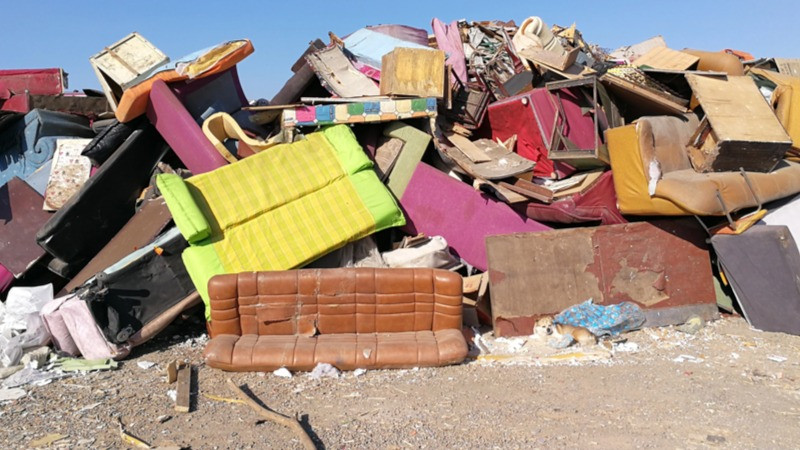
Bulky waste creates several interconnected costs.
Labor: Large furniture and irregular materials require repeated handling, loading, and sometimes pre-processing.
Transportation: Bulky items occupy considerable vehicle space, potentially limiting the amount transported per trip.
Maintenance: Blade wear, blockages, and unplanned downtime can increase operating expenses.
Disposal: Landfill or other treatment fees vary by location and charging method.
Transportation is particularly important when waste volume, rather than vehicle payload, limits loading capacity. Shredding can make bulky materials easier to handle and transport. However, the actual cost reduction depends on the processed material's bulk density, vehicle capacity, and hauling distance.
ZAECOTECH's bulky waste shredding solutions combine size reduction with material conveying and, where required, metal separation.
A low-speed, high-torque twin-shaft shredder uses shearing and tearing action to process oversized furniture, mattresses, pallets, and mixed bulky waste into smaller fragments. Appropriate cutting components and accessible maintenance points help support reliable operation and routine servicing.
A customized line may also integrate:
Feeding and discharge conveyors to reduce repeated manual handling.
Magnetic separation to recover suitable ferrous components, such as furniture springs and metal fittings.
Dust collection and intelligent controls to support cleaner operation, monitoring, and equipment protection.
By coordinating these components, operators can create a more organized workflow instead of relying on a stand-alone shredder. The final configuration should match the incoming materials, required output, and site conditions.
The right equipment capacity depends on daily waste volume, operating hours, material characteristics, and downstream requirements.
ZAECOTECH's bulky waste shredder range provides the following reference specifications:
| Model | Processing capacity | Reference output size |
|---|---|---|
| B160 | 10–20 m³/h | 100–300 mm |
| B180 | 20–40 m³/h | 100–300 mm |
| B200 | 30–60 m³/h | 100–300 mm |
These are reference figures, not guaranteed throughput for every material. Actual performance varies with waste composition, feed size, moisture content, and operating conditions.
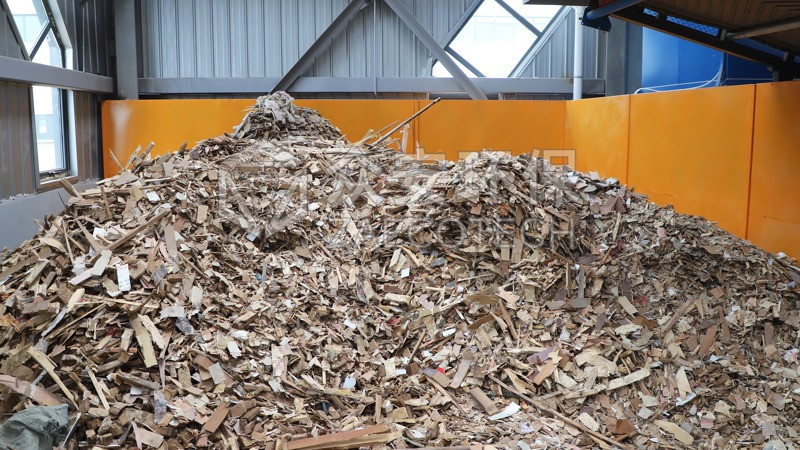
Before selecting a model, operators should confirm three requirements: the expected processing volume, the target output size, and the intended use of the shredded material. These factors determine whether the project needs a shredder alone or an integrated line with conveying, magnetic separation, and dust collection.
ZAECOTECH's bulky waste shredding project in Zhejiang, China, demonstrates how equipment can be integrated into a municipal waste processing facility.
Materials: Discarded sofas, office desks, chairs, and other furniture.
Processing capacity: 15–40 m³/h.
Main equipment: Metal chain conveyor, twin-shaft shredder, discharge belt conveyor, magnetic separator, pulse dust collector, and intelligent control cabinet.
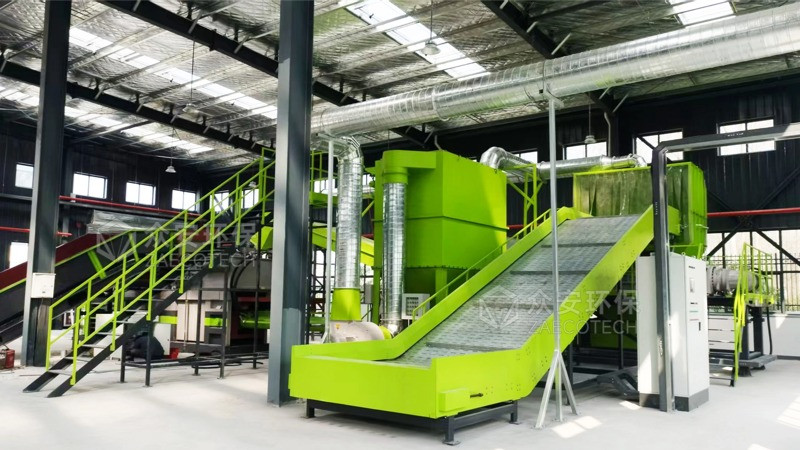
The process begins with unloading and feeding bulky waste into the shredding system. The shredder reduces the material into smaller pieces or elongated fragments. A magnetic separator then extracts suitable ferrous components, while the remaining material is conveyed for subsequent handling and terminal disposal.
The project illustrates an important design principle: an effective bulky waste reduction line must coordinate feeding, shredding, separation, dust control, and material discharge.
The payback period depends on the initial investment and the net benefits generated during operation. Rather than assuming a fixed savings percentage, operators should calculate ROI using their own operating data.
Initial investment (CapEx) may include the shredder, conveyors, magnetic separator, dust collection system, electrical controls, installation, and necessary site modifications.
Operating costs (OpEx) include electricity, labor, blade replacement, routine maintenance, repairs, and other auxiliary expenses.
Potential economic benefits may include lower transportation and handling costs, revenue from recovered metal, and confirmed subsidies or service income where applicable.
Use the following preliminary calculations:
Annual net operating benefit = Annual transportation and handling savings + Net material recovery revenue + Confirmed incentives − Additional annual operating costs
Simple payback period = Initial project investment ÷ Annual net operating benefit
The result depends on actual operating hours, transport distance, disposal arrangements, recovery revenue, and maintenance requirements.
A reliable assessment compares current operating costs with the expected costs and benefits of the proposed line before investment.
The most suitable solution starts with the actual waste stream and processing objectives. To develop a practical configuration, ZAECOTECH needs to understand:
Material: Furniture, mattresses, wooden pallets, or mixed bulky waste.
Processing capacity: Average and peak hourly or daily volume.
Output requirements: Target particle size and downstream application.
Site conditions: Available space and existing equipment.
Project scope: A stand-alone shredder or a complete line with conveying, separation, and dust collection.
ZAECOTECH provides industrial shredding equipment and customized solid waste pre-treatment solutions to help waste operators improve handling efficiency and plan long-term operating costs.
Planning a bulky waste reduction project? Contact ZAECOTECH with your material type, required capacity, output size, and site conditions to discuss a suitable equipment configuration and quotation.


 中文


