

Used tyre recycling plant for sale solutions support the growing need to convert end-of-life tires into reusable resources. Waste tires are difficult to manage because of their bulky structure, durable rubber, and complex material composition. Without effective recycling, valuable materials may be lost and disposal pressure can increase.
A well-designed waste tyre recycling plant integrates shredding, granulation, and material separation to process scrap tires into rubber chips, rubber granules, rubber powder, and recovered steel. These recycled materials can serve as raw materials for various industrial applications, helping improve resource utilization and support a more sustainable recycling industry.
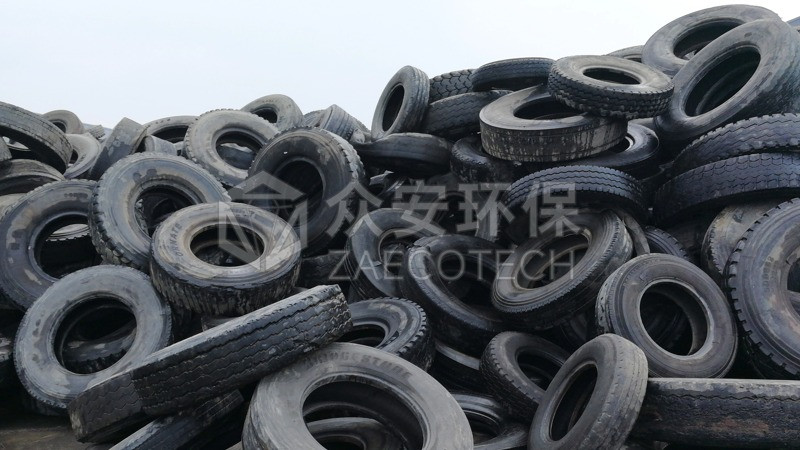
Different tire types can be processed according to their dimensions, construction, and material composition. Common feedstocks include:
Passenger car tires
Truck and bus tires
Commercial vehicle tires
Other suitable end-of-life tires
Tires contain rubber, steel reinforcement, and sometimes textile fiber. These components require different processing and separation methods.
Before selecting a recycling system, operators should evaluate tire diameter, steel content, feedstock condition, and expected daily throughput. Oversized tires may require additional cutting or specialized feeding equipment before entering the main processing line.
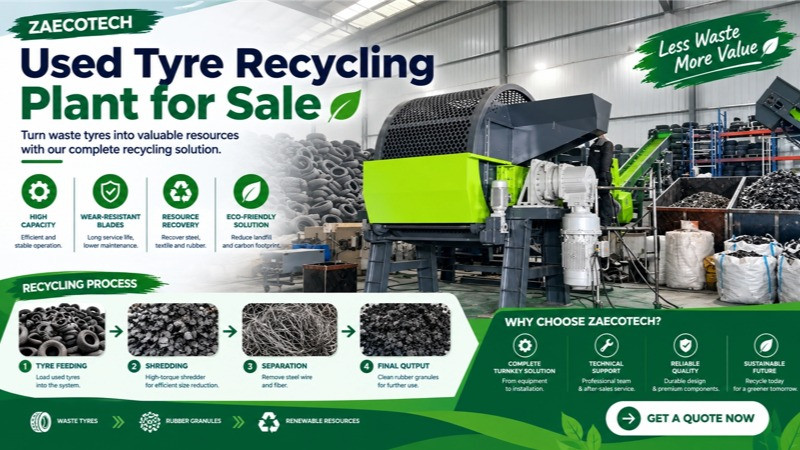
A waste tire recycling line typically combines mechanical size reduction with material separation to recover useful components.
Typical processing flow:
Waste tires → Pre-cutting → Primary shredding → Secondary shredding and granulation → Steel separation → Fiber separation and screening → Recycled products
The main processing stages include:
Primary shredding: Breaks whole tires into smaller pieces for easier handling and further processing.
Secondary shredding and granulation: Reduces rubber to the required particle size.
Steel separation: Removes steel wire from the rubber stream for recovery.
Fiber separation and screening: Removes textile fiber where present and classifies the rubber by size.
The final equipment configuration depends on tire specifications, required capacity, target particle size, and the quality requirements of downstream users.
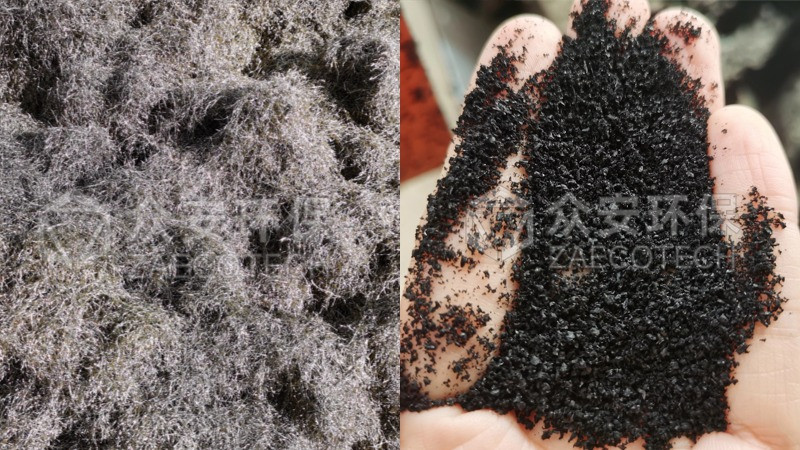
A properly configured recycling plant can recover several valuable material streams from scrap tires.
| Recycled product | Potential applications |
|---|---|
| Rubber chips | Further size reduction, selected civil engineering applications, and rubber processing |
| Rubber granules | Sports surfaces, playground flooring, and molded rubber products |
| Rubber powder | Rubber manufacturing, modified asphalt, and other suitable industrial applications |
| Recovered steel | Metal recycling and steel recovery channels |
| Textile fiber | Suitable downstream applications or controlled management, depending on its quality |
The commercial value of these products depends on particle size, purity, local market demand, and applicable product standards. Where tire-derived fuel (TDF) is the target, the processing system must also meet the fuel user's size, composition, and handling requirements.
Choosing a suitable system requires more than estimating equipment capacity. The complete process should match the available feedstock and the intended market for recycled materials.
Important factors include:
Processing capacity: Match the line to the expected supply of scrap tires and planned operating hours.
Output specifications: Define rubber particle size, steel recovery requirements, and acceptable fiber content.
Equipment configuration: Determine whether pre-cutting, additional shredding, granulation, or extra separation stages are necessary.
Plant layout: Plan space for feeding, conveyors, processing equipment, storage, and maintenance access.
Operating costs: Consider electricity consumption, wear parts, labor, and maintenance requirements.
Environmental and safety controls: Evaluate dust collection, noise reduction, fire prevention, and local regulatory requirements.
A well-planned configuration helps balance production efficiency, material quality, operating costs, and the value of recovered resources.
ZAECOTECH provides solid waste pretreatment equipment and customized recycling solutions for industrial projects. With more than 20 years of manufacturing experience, the company can assist with equipment selection and process configuration according to specific material and production requirements.
For a waste tire recycling project, the proposed solution can be tailored to tire dimensions, processing capacity, target rubber size, separation requirements, and downstream applications. The goal is to integrate shredding, granulation, and separation into a coordinated processing system.


 中文


