

Wind turbine blades disposed of typically follow several end-of-life routes, including landfill disposal, energy recovery, mechanical recycling, and reuse in other applications. However, managing retired blades is not as straightforward as handling conventional industrial waste. Their large dimensions, high-strength composite structures, and combination of fibers and resin make transportation, size reduction, and material recovery challenging.
As more wind turbines reach the end of their service life, finding practical ways to process decommissioned blades is becoming increasingly important. A properly configured wind turbine blades recycling system can reduce oversized blades into manageable pieces and prepare the material for further processing. Depending on the recycling route, the recovered material may be used in cement kiln co-processing, new composite products, construction fillers, and other industrial applications.
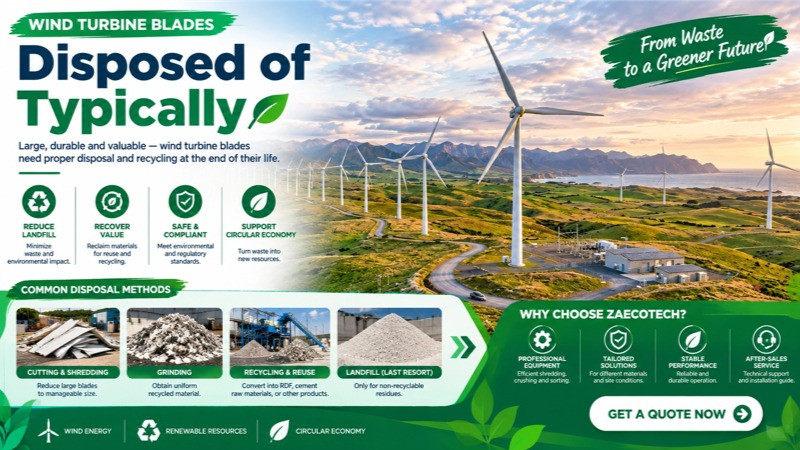
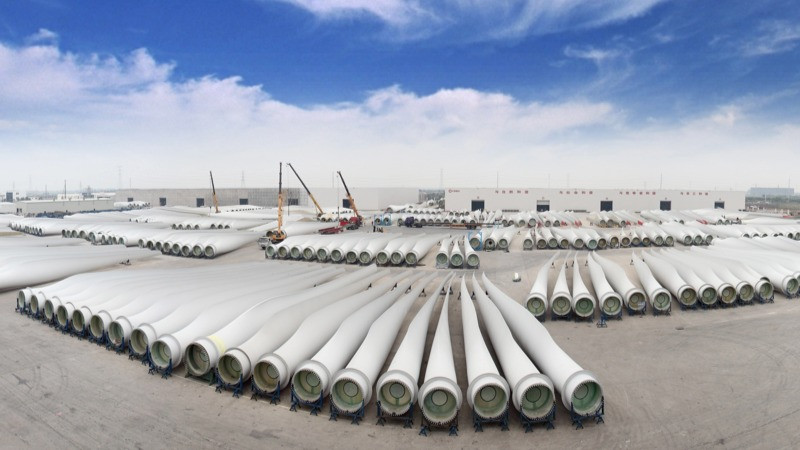
When a wind turbine reaches the end of its service life, its blades must be dismantled and transported for disposal, reuse, or recycling. The selected route depends on local regulations, transportation distance, available treatment facilities, and the potential value of recovered materials.
Common end-of-life options include:
Landfill disposal: Retired blades are cut into manageable sections and transported to approved disposal facilities where permitted. This is a relatively straightforward route, but it does not recover the embedded material value.
Incineration or energy recovery: Certain prepared composite waste streams may be used for energy recovery in suitable facilities. The feasibility depends on material composition, emission controls, and local requirements.
Mechanical recycling: Blades are cut, shredded, crushed, and sometimes ground into smaller fractions for downstream use.
Cement kiln co-processing: Prepared blade waste may provide energy from its resin content while suitable mineral components contribute to the cement-making process, subject to the kiln's acceptance criteria.
Reuse and repurposing: Selected blade sections can be adapted for structures, furniture, or other applications when their condition, design, and safety requirements allow.
The scale of the issue is also significant. A widely cited 2017 study projected approximately 43 million tonnes of cumulative wind turbine blade waste worldwide by 2050. This is a long-term forecast rather than the amount of waste currently generated. It illustrates why practical end-of-life management and recycling routes deserve attention.
Wind turbine blades are designed to withstand demanding operating conditions over many years. Their strength and lightweight construction make them effective in wind energy generation, but these same properties create challenges when the blades become waste.
1. Oversized dimensions increase handling and transportation difficulty.
Long blades are difficult to move through roads, loading areas, and industrial facilities. Cutting them into smaller sections before transportation or processing can make logistics more manageable, although the cutting method must suit the blade dimensions and site conditions.
2. Composite materials are difficult to separate.
Many blades contain glass fiber-reinforced polymer (GFRP), while some also incorporate carbon fiber-reinforced polymer (CFRP). Fibers are embedded in a resin matrix, making it difficult to separate the original components using conventional recycling methods.
3. Tough materials create demanding processing conditions.
Thick composite sections can place heavy loads on cutting and shredding equipment. Abrasion, fiber entanglement, and inconsistent feed dimensions can affect throughput, blade wear, and maintenance requirements.
4. The best treatment method depends on the final application.
Material intended for cement kiln co-processing may have different size and composition requirements from material intended for composite products or fine fillers. Selecting equipment without defining the downstream application can result in unnecessary processing stages or unsuitable output.
These challenges make pretreatment an important part of a practical wind turbine blade recycling strategy.
Several technologies can manage decommissioned blades, but they differ in processing requirements, material recovery potential, investment, and industrial maturity.
| Method | How it works | Typical considerations |
|---|---|---|
| Mechanical recycling | Cuts, shreds, crushes, and grinds blades into smaller material fractions | Suitable for size reduction and preparing feedstock for downstream applications |
| Cement kiln co-processing | Uses suitably prepared composite waste as an alternative fuel and mineral input | Requires the material to meet the cement plant's acceptance and process requirements |
| Thermal recycling | Uses heat-based processes, such as pyrolysis, to treat composite materials | Requires specialized process control and evaluation of recovered products |
| Chemical recycling | Uses chemical processes to break down or separate components of selected composites | Feasibility depends on resin chemistry, process costs, and technology maturity |
| Reuse and repurposing | Reuses selected blade sections in new structures or products | Depends on blade condition, engineering design, safety, and local demand |
Mechanical recycling is particularly relevant when oversized blades need to be reduced into manageable pieces before further treatment. It can serve as a standalone size-reduction process or as the front end of a larger recycling line.
For projects targeting cement kiln co-processing, the mechanical line should prepare material that meets the receiving facility's requirements. For projects targeting new composite products or fillers, further grinding, screening, and material-quality assessment may be needed. No single method is suitable for every blade or every market.
An industrial recycling system combines equipment stages to reduce blade size, control output dimensions, and prepare composite waste for the selected downstream route.
Typical processing flow:
Decommissioned blades → Pre-cutting → Feeding and conveying → Primary shredding → Secondary crushing or fine shredding → Screening and sorting → Recycled material
The exact process depends on blade dimensions, material composition, required throughput, and final product specifications.
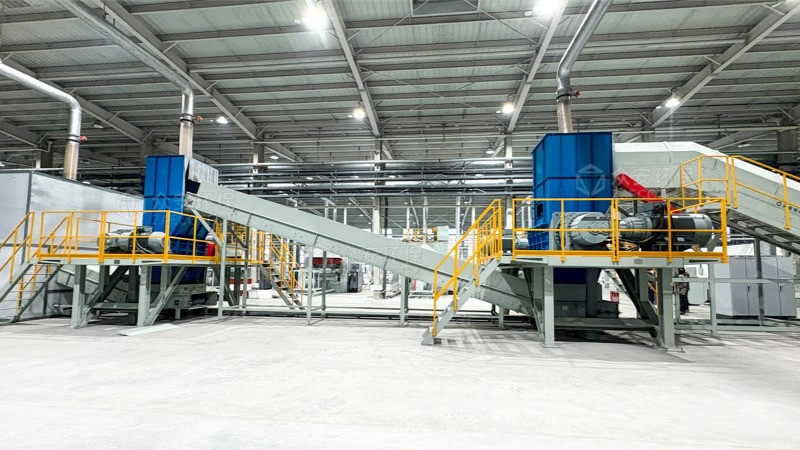
Hydraulic cutting equipment or heavy-duty saws: Divide oversized blades into sections suitable for feeding and transport.
Wind turbine blade shredder: Uses high-torque shearing to reduce tough composite sections into smaller pieces.
Primary crusher or fine shredder: Further reduces material to meet downstream size requirements.
FRP pulverizer: Produces finer composite material when the target application requires it.
Screening and sorting equipment: Helps classify output and support the required material quality.
Dust collection and intelligent controls: Help manage airborne particles and monitor equipment operation.
ZAECOTECH's Wind Turbine Blades Recycling System integrates specialized shredders, primary crushing, fine grinding, pulverizing, sorting, and intelligent control according to project requirements. The system is designed to handle GFRP blades and other composite waste.
| Parameter | Published reference |
|---|---|
| Processing capacity | 5–15 tonnes per hour |
| Adjustable output size | 10–50 mm |
| Maximum intake width | 1,200–2,500 mm, customizable |
| Total installed power | 160–450 kW |
| FRP pulverizer fineness | 20–500 mesh |
These figures are equipment reference ranges, not guaranteed results for every project. Actual throughput, output size, and energy consumption depend on blade construction, feeding conditions, equipment configuration, and operating requirements.
The key advantage is the ability to configure the processing line around the actual blade material and intended output rather than relying on one machine to meet every requirement.
The value of a recycling system depends not only on reducing blade size, but also on whether the processed material can be accepted and used by downstream industries.
Cement kiln co-processing
Prepared composite waste can be used as an alternative fuel and, where suitable, as a source of mineral components in cement production. This route is relevant for projects that have access to cement plants able to accept the material. Particle size, composition, heating value, chlorine content, and other acceptance criteria must be checked with the receiving facility.
New composite products
Processed blade material may be incorporated into selected composite products, depending on fiber condition, particle size, resin content, and the requirements of the manufacturing process. The properties of recycled fibers should not be assumed to match those of virgin reinforcement.
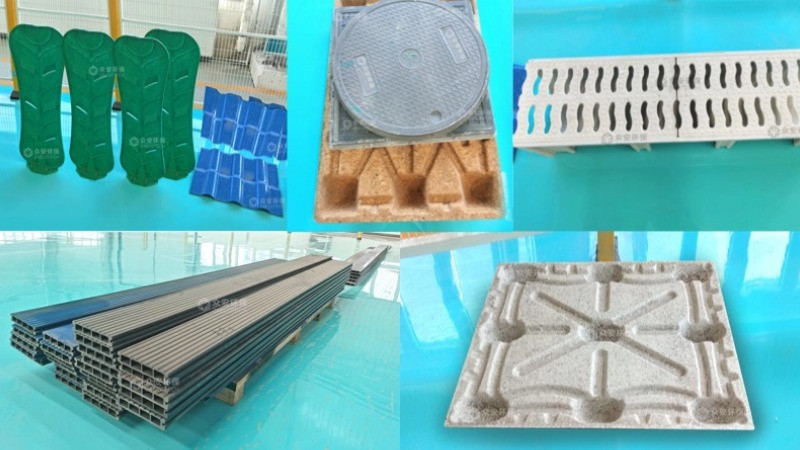
Construction materials and fillers
Ground composite material may be considered for suitable construction products or filler applications. Its suitability depends on technical performance, product standards, and the requirements of the intended application.
Reuse of blade sections
Where blade sections remain structurally suitable, repurposing may be possible for certain outdoor structures, barriers, furniture, or architectural projects. This option requires appropriate engineering assessment and does not replace industrial recycling for all retired blades.
For recycling businesses, the practical approach is to identify the downstream user first, confirm its material specifications, and then design the cutting, shredding, grinding, and separation stages accordingly.
Conclusion
Wind turbine blades disposed of at the end of their service life may be landfilled, sent for energy recovery, mechanically recycled, or repurposed. Because composite blades are large, tough, and difficult to separate, effective pretreatment is essential for many industrial recycling routes.
A well-configured wind turbine blades recycling system can reduce oversized blades into manageable material fractions and prepare them for cement kiln co-processing, composite manufacturing, construction fillers, or other suitable applications. ZAECOTECH offers customized blade recycling solutions based on material characteristics, processing capacity, output requirements, and downstream use.
For each project, the most suitable route should be determined by the blade composition, logistics, local regulations, available treatment facilities, and the market for recovered materials.


 中文


