
The global apparel, upholstery, and technical non-woven industries generate tens of millions of tons of post-industrial fabric offcuts and post-consumer discarded garments annually. With circular textile mandates tightening worldwide, textile recyclers and alternative fuel producers are under immense pressure to process compressed clothing bales, heavy denim scraps, polyester roll ends, and multi-layered upholstery textiles at industrial scale. Depending on fiber composition and contamination levels, this waste stream is processed either for mechanical fiber regeneration—producing reclaimed shoddy fibers for acoustic automotive insulation, mattress padding, and spun yarns—or converted into high-calorific Refuse-Derived Fuel (RDF) for cement kilns.
However, industrial textiles are among the most mechanically punishing materials to shred continuously. High-tenacity synthetic yarns (polyester, nylon, aramid), elastic spandex blends, and tightly woven cotton twills resist blunt impact completely. When fed into conventional hammer mills or standard waste crushers, long fabric strips wind tightly around rotor shafts, frictional heat melts synthetic fibers into hardened plastic lumps, and embedded metal zippers or rivets shatter brittle granulator blades. Deploying purpose-built high-capacity industrial textile shredders—engineered with micro-gap scissor-shear cutting geometry, low-speed high-torque planetary drivetrains, load-sensing hydraulic pusher rams, and dynamic anti-wrapping shaft seals—enables recycling plants to process whole compressed garment bales into uniform, clean flakes ready for precision shoddy fiber opening. This technical guide examines textile fiber rheology, anti-wrapping cutting kinematics, metallic hardware tolerance, and integrated plant workflows for high-capacity textile shredding and fiber regeneration.

To engineer an uninterrupted, high-throughput size-reduction line for baled garments, roll fabrics, and technical non-wovens, plant operators must neutralize four distinct material challenges:
High-Tenacity Yarn Elongation and Shaft Wrapping: Continuous filament polyester, nylon webbing, and twisted denim seams exhibit immense tensile strength and stretch before breaking. Under blunt impact or dull knives, unbroken fabric ribbons spiral tightly around rotor ends, spacer rings, and bearing journals, generating extreme radial pressure that destroys shaft seals and seizes the drivetrain.
Thermoplastic Melting of Synthetic Blends: Modern apparel and non-woven fabrics contain high percentages of polyethylene terephthalate (PET), polypropylene (PP), and polyamide (nylon) fibers. High-speed rotor friction rapidly elevates cutting chamber temperatures above 160 degrees Celsius, melting synthetic fibers into sticky, glazed clumps that blind discharge screens and ruin fiber spinnability.
Dense Bale Compression and Hopper Bridging: Post-consumer garments and factory offcuts typically arrive in hydraulic-compressed bales weighing 300 to 500 kg, bound with steel or PET strapping. Conversely, loose cutting-room scraps exhibit ultra-low bulk density and float above spinning rotors without positive mechanical feeding.
Concealed Metal Zippers, Rivets, Buttons, and Snaps: Post-consumer clothing and denim waste carry thousands of brass zippers, hardened steel buttons, belt buckles, and magnetic snaps. In conventional high-speed textile cutters, unremoved metal hardware chips knife edges immediately and creates dangerous friction sparks inside lint-filled air ducts.
Transforming tightly compressed clothing bales and tough industrial fabrics into uniform 30 mm to 60 mm flakes—without damaging fiber staple length or melting synthetics—requires a specialized mechanical architecture:
Rather than tearing fibers violently via blunt impact, specialized textile shredders execute a precision scissor-shear cut. Concave, four-way indexable rotor cutters pass stationary counter-knives with ultra-tight micro-gap clearances (typically 0.3 mm to 0.6 mm). This razor-sharp shearing geometry slices elastic spandex blends, heavy multi-layered denim seams, and woven polyester straps cleanly on the first pass, preserving clean fiber edges for downstream shoddy opening while eliminating long uncut tails.
Operating at controlled low rotor speeds (typically 50 to 80 RPM) driven by high-efficiency planetary reduction gearboxes, the shredder prioritizes immense rotational torque over blade tip velocity. Keeping tip speeds low prevents frictional heat buildup inside the cutting chamber, ensuring synthetic polyester and polypropylene fabrics remain cool, soft, and completely unmelted.
To eliminate labor-intensive manual bale breaking and hand-feeding, the shredder integrates a heavy-duty, PLC-regulated horizontal hydraulic pusher ram. Guided by real-time motor amperage telemetry, the ram compresses whole de-wired garment bales and bulky fabric rolls steadily against the rotating cutting drum, maintaining maximum hourly throughput while automatically retracting if sudden torque spikes occur.
To prevent stray threads and lint from infiltrating mechanical drivetrains, the rotor ends feature machined steel scraper rings that mate closely with the housing sidewalls, physically blocking textile strips from reaching the shaft journals. Outboard spherical roller bearings are isolated externally behind open atmospheric air gaps and multi-stage grease-purged labyrinth seals.

The table below summarizes shaft wrapping resistance, synthetic melting control, whole-bale automation, and hardware tolerance across traditional textile cutting equipment versus specialized high-capacity anti-wrapping textile shredders:
| Performance Metric | Traditional Rotary Guillotines / Hammer Mills | High-Capacity Anti-Wrapping Textile Shredders |
|---|---|---|
| Yarn & Fabric Shaft Wrapping | Long synthetic strips and seams wrap tightly around high-speed rotors within shifts. | Micro-Gap Scissor Cutters & Scraper Rings slice fabrics cleanly with zero shaft wrapping. |
| Synthetic Fiber Melting & Glazing | High tip speeds generate intense friction, melting polyester/nylon and ruining fiber quality. | Low-Speed High-Torque Kinematics keep chamber temperatures cool to preserve fiber softness. |
| Bale Feeding & Labor Automation | Guillotines require manual bale unstacking and continuous operator feeding at the blade throat. | Load-Sensing Hydraulic Pusher Ram processes whole compressed bales automatically. |
| Zipper, Button & Rivet Tolerance | Metal hardware chips brittle guillotine blades and triggers sparks in high-speed hammer mills. | Vacuum-Hardened High-Alloy Cutters & PLC Reversal absorb metal shock safely. |
Continuous size reduction of zipper-laden garments and abrasive canvas textiles requires specialized tool metallurgy and strict lint-dust containment:
Vacuum-Hardened High-Alloy Indexable Cutters: Rotor knives and stationary bed blades are forged from premium high-carbon, high-chromium cold-work tool steels (such as D2 or DC53) and vacuum heat-treated to 56–58 HRC. Four-way indexable concave square inserts allow maintenance crews to rotate worn cutting edges 90 degrees four times before workshop regrinding, maintaining tight micro-gap tolerances even when cutting through brass zippers and steel rivets.
Hardox 500 Chamber and Pusher Armoring: Internal hopper sidewalls, hydraulic pusher guideways, and perforated screen cradles are lined with replaceable, bolt-on Hardox 500 wear plates, protecting the primary structural chassis from continuous sliding friction.
Spark Detection and Negative-Pressure Lint Filtration: Shredding cotton and synthetic textiles generates fine, flammable cellulosic and polymeric lint. Complete textile lines integrate enclosed discharge hoods connected to negative-pressure pulse-jet baghouse dust collectors equipped with infrared spark detectors, explosion venting panels, and automated water-mist suppression systems.
A modern mechanical textile recycling facility integrates high-capacity primary shredding directly into an automated metal-separation and multi-roller shoddy fiber opening line:
Stage 1: Bale De-Wiring and Heavy Belt Infeed: Compressed garment bales or fabric rolls are loaded onto a heavy-duty belt conveyor where external baling wires are snipped, metering material steadily into the shredder hopper.
Stage 2: High-Capacity Micro-Gap Primary Shredding: The hydraulic pusher ram presses the textiles against the low-speed cutting rotor, slicing fabrics cleanly through a calibrated 40 mm or 50 mm screen cradle into uniform, unmelted fabric patches without wrapping.
Stage 3: Inline Magnetic and Air-Gravity Hardware Separation: Shredded textile patches pass beneath an overband magnetic separator to extract ferrous buttons and snaps, followed by a vertical air-gravity separator (heavy-part trap) that drops brass zippers, thick seams, and plastic buttons into a reject bin while conveying clean fabric patches pneumatically forward.
Stage 4: Multi-Cylinder Shoddy Fiber Opening and Carding: Clean, hardware-free fabric patches enter a multi-drum tearing and fiber-opening line fitted with progressively finer saw-tooth wire cylinders—gently teasing apart woven yarns back into fluffy, uniform reclaimed staple fibers ready for non-woven needle-punching, acoustic felt production, or open-end spinning.
Transforming baled post-consumer garments and tough industrial fabric scraps into high-value reclaimed shoddy fibers or clean alternative fuel requires overcoming the mechanical pitfalls of shaft wrapping, synthetic melting, and metallic hardware damage. Deploying high-capacity anti-wrapping textile shredders—engineered with micro-gap scissor-shear cutting geometry, low-speed high-torque planetary drivetrains, load-sensing hydraulic pusher rams, and four-way indexable alloy cutters—eliminates manual pre-cutting and guarantees uninterrupted multi-shift production. This proven engineering foundation protects downstream fiber-opening cylinders, maximizes fiber yield, and empowers textile recyclers to scale profitably.
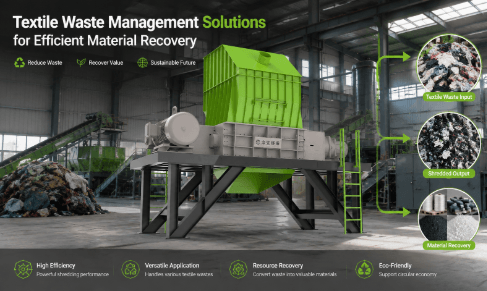
Textile Waste Management Solutions for Efficient Material Recovery
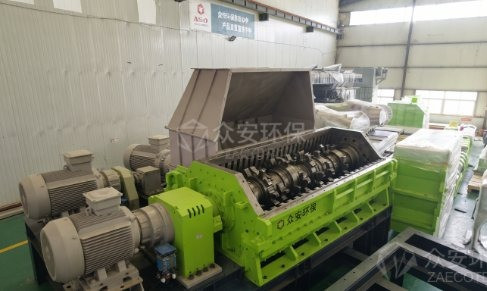
Textile Recycling Machinery: Rotary Shear Shredders for Scrap Fabrics and Garments
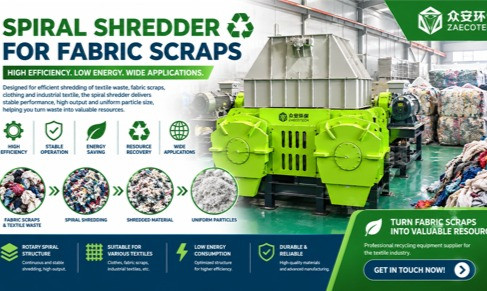
Spiral Shredder for Fabric Scraps: Textile Waste Recycling
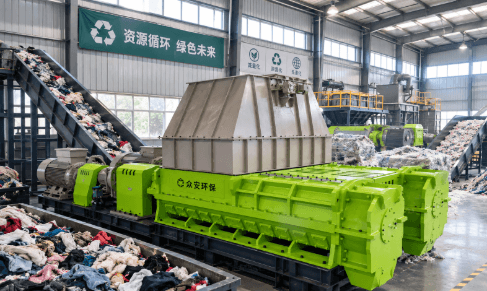
Why High Torque Rotary Shear Shredders Deliver Superior Performance in Waste Textile Processing


 中文


