
Modern Material Recovery Facilities (MRFs), Mechanical-Biological Treatment (MBT) plants, and Refuse-Derived Fuel (RDF) preparation lines generate massive volumes of lightweight, non-recyclable soft municipal combustibles. After automated optical sorters, magnetic separators, and ballistic screens extract rigid plastic bottles, ferrous cans, aluminum, and wet organic fines, the remaining high-calorific residue consists overwhelmingly of flexible polyethylene shopping bags, stretch films, multilayered food packaging rejects, discarded clothing, strapping bands, and soiled paper. Rather than consigning this energy-rich fraction to landfill, cement kilns and industrial co-generation boilers increasingly demand it as a high-value coal replacement—provided it is reduced to a uniform, free-flowing particle size between 20 mm and 50 mm.
However, processing soft municipal combustibles represents one of the most mechanically unforgiving challenges in industrial size reduction. Unlike rigid wood or brittle plastics that fracture cleanly upon impact, flexible films and synthetic textiles stretch, twist, and absorb kinetic energy. When fed into conventional high-speed hammer mills or standard waste crushers, long plastic strips wrap tightly around drive shafts, frictional heat melts low-density polyethylene onto cutter edges, and fluffy packaging rejects bridge above the cutting rotor. Deploying specialized single-shaft fine shredders and micro-gap shear systems—engineered with precision scissor-cutting clearances, low-speed high-torque planetary drivetrains, intelligent hydraulic pusher rams, and dynamic anti-wrapping scraper combs—enables waste operators to convert tangled soft municipal rejects into uniform, high-calorific RDF flakes. This technical guide examines flexible polymer rheology, micro-gap shearing mechanics, thermal friction control, and plant integration workflows for optimizing soft municipal combustible size reduction.
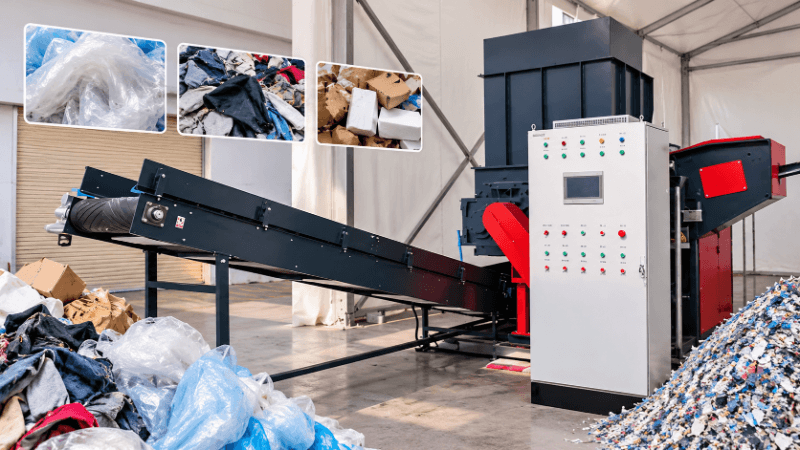
To engineer an uninterrupted fine-shredding circuit for post-sorting municipal films, textiles, and packaging rejects, plant engineers must overcome four distinct rheological hazards:
High Tensile Elongation and Shaft Wrapping: Linear Low-Density Polyethylene (LLDPE) stretch films, woven polypropylene sacks, and synthetic textile yarns exhibit extreme elongation before breaking. Under blunt impact or dull knives, unbroken strips spiral tightly around rotor ends, spacer rings, and bearing journals, generating intense radial pressure that destroys shaft seals and seizes the drivetrain.
Low Melting Points and Thermoplastic Glazing: Municipal packaging waste contains abundant polyolefins (LDPE, HDPE, PP) that soften between 105 and 135 degrees Celsius. High-speed blade friction rapidly elevates chamber temperatures past this threshold, melting plastic films into sticky, hardened lumps that coat the cutting rotor and blind discharge screens.
Ultra-Low Bulk Density and Hopper Bridging: Aerated plastic bags, crumpled foil pouches, and loose textiles occupy massive volume relative to their weight. Without positive mechanical compression, this lightweight material floats above the spinning rotor, causing severe hopper bridging and starving downstream pneumatic conveyors.
Residual Moisture and Tramp Contaminants: Even after ballistic screening, soft municipal rejects carry 15 to 25 percent surface moisture alongside stray steel wire ties, small batteries, and abrasive grit. Wet fibers clump together under heat, while unremoved metal pieces chip brittle granulator blades.
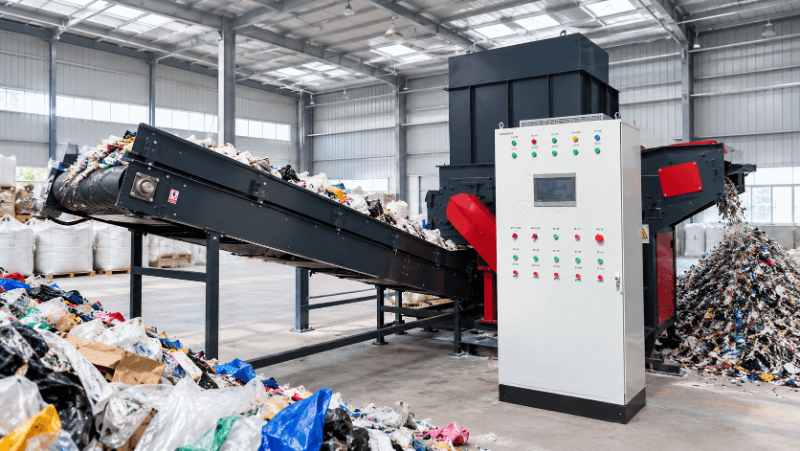
Transforming fluffy, tangled plastic films and textiles into precision-sized 20 mm to 50 mm fuel flakes requires a purpose-built mechanical architecture focused on clean scissor shearing, zero thermal buildup, and positive feeding:
Rather than beating material apart through blunt impact, specialized soft-waste fine shredders execute a true precision scissor cut. Concave, four-way indexable rotor knives pass stationary counter-knives with tightly calibrated micro-gap clearances (typically 0.4 mm to 1.0 mm). This razor-sharp shearing action slices flexible films, elastic waistbands, and tough woven strapping cleanly on the first pass, eliminating long uncut tails that cause downstream pipeline blockages.
Operating at controlled low-to-medium rotor speeds (typically 60 to 95 RPM) driven by high-efficiency planetary reduction gearboxes, the shredder prioritizes high rotational torque over tip velocity. Keeping blade tip speeds low prevents frictional heat accumulation inside the cutting chamber, ensuring low-melting-point polyethylene films remain cool, crisp, and free-flowing without melting or glazing.
To permanently eliminate hopper bridging and guarantee high volumetric throughput with lightweight feedstocks, the machine integrates a PLC-regulated horizontal hydraulic pusher ram. Guided by real-time motor amperage telemetry, the ram compresses fluffy films and textiles steadily against the rotating cutting drum, maintaining optimal cutting pressure while automatically retracting if sudden torque spikes occur.
To prevent stray threads and plastic strips from wrapping around the rotor ends, machined scraper rings interlock closely with the housing sidewalls, while heavy-duty stationary comb scrapers strip clinging films from between the rotor knives on every revolution. Outboard spherical roller bearings are isolated externally behind open atmospheric air gaps and multi-stage grease-purged labyrinth seals.
The table below summarizes shaft wrapping resistance, plastic melting control, particle uniformity, and energy efficiency across conventional high-speed hammer mills versus specialized micro-gap shear shredders for soft municipal combustibles:
| Performance Metric | Conventional High-Speed Hammer Mills | Micro-Gap Shear Fine Shredders |
|---|---|---|
| Film & Textile Shaft Wrapping | Long plastic strips and yarns wrap tightly around high-speed shafts within hours. | Micro-Gap Scissor Cutters & Scraper Combs slice flexible materials cleanly with zero wrapping. |
| Thermoplastic Melting & Screen Blinding | High-speed friction melts PE/PP films, glazing hammers and plugging discharge screens. | Low-Speed High-Torque Cutting keeps chamber temperatures cool to prevent melting. |
| Particle Size & Pneumatic Flow | Produces ragged, tangled streamers that clog cement kiln rotary airlocks and feed pipes. | Calibrated Perforated Screen Cradles guarantee uniform 20–50 mm free-flowing flakes. |
| Power Consumption & Noise | High kinetic windage losses waste electricity and generate excessive acoustic noise. | Direct Planetary Shear Efficiency cuts specific power consumption by up to 35%. |
Even sorted soft municipal combustibles carry abrasive mineral fillers (such as calcium carbonate in shopping bags), residual road grit, and occasional metallic fasteners that accelerate wear on standard steel components:
Vacuum-Hardened High-Alloy Indexable Cutters: Rotor knives and stationary bed blades are forged from premium high-carbon, high-chromium cold-work tool steels (such as D2 or DC53) and vacuum heat-treated to 56–58 HRC. Four-way indexable concave square inserts allow maintenance crews to rotate worn cutting edges 90 degrees four times before workshop regrinding, extending tool life fourfold while preserving tight micro-gap tolerances.
Hardox 500 Chamber and Pusher Armoring: Internal hopper walls, hydraulic pusher guideways, and screen support cradles are lined with replaceable, bolt-on Hardox 500 wear plates, protecting the main structural frame from sliding abrasion and corrosive organic moisture.
PLC Auto-Reversing Tramp Metal Protection: Monitored continuously by high-speed motor current sensors, the control system detects sudden torque spikes from stray bolts or batteries within milliseconds, reversing rotor rotation automatically to clear the obstruction before resuming normal forward shredding.
A modern, high-availability RDF preparation line integrates precision soft-waste size reduction into a continuous, automated material processing circuit:
Stage 1: Upstream Screening and Metal Extraction: Post-sorting municipal rejects pass through ballistic separators to strip away wet organic fines and heavy 3D inerts, followed by overband magnets and eddy current separators to remove ferrous and non-ferrous metals.
Stage 2: Zig-Zag Air Classification (PVC Removal): The lightweight 2D combustible stream enters a calibrated air classifier that lifts clean polyethylene films, paper, and textiles into the shredder infeed while dropping high-chlorine PVC cables and heavy rubber pieces into a reject bin.
Stage 3: Precision Micro-Gap Fine Shredding: Metered via enclosed belt conveyors into the single-shaft fine shredder, the hydraulic pusher ram presses the soft combustibles against the low-speed cutting rotor, sizing the stream cleanly through a calibrated 30 mm or 50 mm screen cradle.
Stage 4: Pneumatic Conveying, Dust Filtration, and Baling: Finished, uniform RDF flakes are extracted via negative-pressure pneumatic conveyors equipped with pulse-jet baghouse dust filtration and spark detection, routing the fuel either directly to cement kiln dosing silos or into high-density bale wrappers for transport.
Converting lightweight plastic films, textiles, and packaging rejects into specification-grade cement kiln fuel requires overcoming the mechanical pitfalls of shaft wrapping, thermoplastic melting, and hopper bridging. Deploying specialized micro-gap shear fine shredders—engineered with precision scissor-cutting clearances, low-speed high-torque planetary drivetrains, load-sensing hydraulic pusher rams, and four-way indexable alloy cutters—ensures uninterrupted multi-shift operation and exact particle size uniformity. This disciplined engineering approach maximizes landfill diversion, protects downstream pneumatic conveying lines, and transforms problematic municipal soft waste into a reliable, high-calorific alternative fuel.

Semi Auto MSW Sorting Line in UAE: A Practical Guide
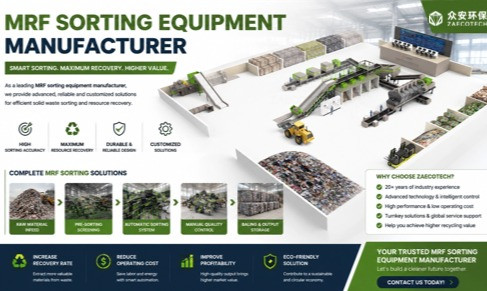
MRF Sorting Equipment Manufacturer: Engineering High-Purity MSW Lines
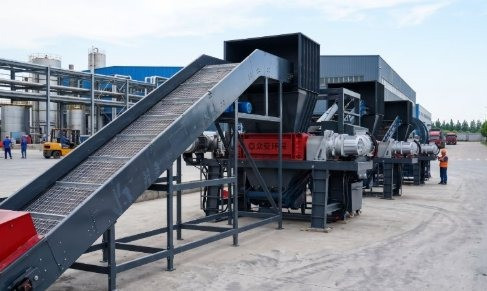
High-Capacity Pre-Shredding and Bag Opening Solutions for Modern MSW Transfer Stations
Plastic Recycling Machine Price in South Africa: Shifting MSW Processing with Advanced Shredders


 中文


