
Modern Municipal Solid Waste (MSW) transfer stations serve as the critical logistical nerve centers connecting urban waste collection networks with distant sanitary landfills, waste-to-energy incineration plants, and regional material recovery facilities (MRFs). Every day, hundreds of collection trucks unload massive volumes of raw, un-segregated household refuse onto transfer station tipping floors. Historically, these facilities functioned simply as basic compaction points, squeezing loose refuse into long-haul trailers. However, rising long-distance haulage costs, tightening municipal landfill diversion mandates, and surging industrial demand for Refuse-Derived Fuel (RDF) and recovered recyclables have transformed the operational mandate of modern transfer stations. Today’s transfer hubs must rapidly burst closed garbage bags, homogenize bulky household discards, and maximize payload density—all at high hourly throughputs without suffering mechanical jams.

Attempting to compact or sort unopened municipal garbage sacks creates immediate downstream operational failures: sealed plastic bags trap air, drastically reducing trailer payload efficiency, while hiding valuable metals and rigid plastics from automated sorting equipment. Deploying specialized high-capacity MSW pre-shredders and industrial bag openers—engineered with low-speed high-torque twin-shaft kinematics, aggressive hook-profile tearing disks, intelligent PLC auto-reversing drives, and anti-wrapping scraper combs—allows transfer stations to process peak truck arrival surges seamlessly. This technical guide examines raw municipal refuse rheology, bag-opening kinematics, tramp metal shock protection, and transfer station layout integration for optimizing high-capacity MSW pre-shredding and bag opening.
To engineer a continuous, high-throughput pre-shredding system for a busy municipal transfer station, facility operators must address the unpredictable physical characteristics of incoming household refuse:
High-Density Polyethylene Sacks and Air Entrapment: Over 80 percent of residential waste arrives tightly knotted inside polyethylene garbage bags. These sealed enclosures trap substantial pockets of air that resist standard transfer compaction and completely shield internal recyclables from downstream magnetic and optical separation.
Severe Peak-Hour Surge Loading: Municipal collection vehicles operate on synchronized city schedules, resulting in massive tipping floor surges during morning and afternoon shift changes. Pre-shredding equipment must feature oversized hoppers and high volumetric processing capacities to clear floor stockpiles rapidly without causing truck queuing delays.
Long Film, Strapping, and Textile Entanglement: Mixed household waste contains abundant stretch films, plastic shopping bags, packing straps, and discarded clothing. In conventional high-speed crushers, these flexible materials wrap tightly around rotating shafts and bearing housings, forcing frequent manual clearing shutdowns.
Concealed Uncrushable Tramp Contaminants: Residential discards frequently hide solid steel brake discs, cast-iron cookware, concrete rubble, and thick hardwood furniture frames. These heavy contaminants subject rigid, gear-driven crushers to violent shock loads that fracture gear teeth and shear drive shafts.
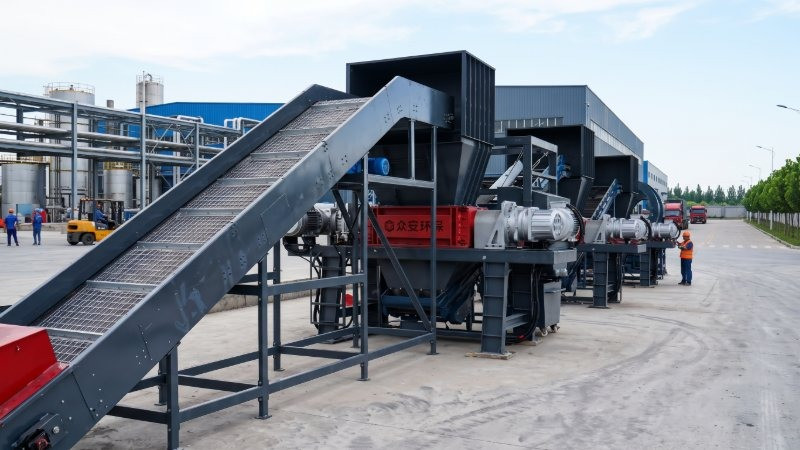
Delivering reliable, continuous bag bursting and coarse size reduction across multi-shift municipal operations requires a purpose-built mechanical architecture focused on massive torque, controlled tearing action, and instant overload recovery:
Unlike high-speed hammer mills that violently pulverize waste, specialized MSW pre-shredders and bag openers operate at intentionally slow rotational shaft speeds (typically 12 to 28 RPM). Driven by high-efficiency planetary reduction gearboxes or closed-loop hydrostatic motors, this low-speed kinematic profile applies immense shearing and tearing forces that burst tough garbage bags open cleanly without shattering glass bottles into abrasive dust or flattening aluminum cans.
The counter-rotating rotor shafts are fitted with thick, spaced cutting disks featuring deep, contoured hook teeth. Rather than grinding waste into fine particles, these mechanical hooks snag, tear, and rip open closed sacks, releasing trapped air and liberating internal commodities onto an aerated, uniform material bed.
To prevent bulky mattresses, carpets, and baled plastics from bridging above the cutting zone, the two parallel rotors operate at slightly differing speeds (asynchronous rotation), continuously pulling material downward into the shear zone. Beneath the rotors, stationary heavy-duty scraper combs project between the cutting disks, stripping away clinging plastic films and wet organic residues with every revolution.
Monitored continuously by real-time motor amperage sensors or hydraulic pressure transducers connected to the central PLC, the drive system detects torque spikes the instant an uncrushable steel block wedges between the disks. Within milliseconds, the rotors automatically reverse direction to back out the obstruction, attempt a re-cut, or alert operators—preventing drivetrain damage and eliminating unscheduled downtime.
The table below summarizes trailer payload density, bag liberation efficiency, tramp metal safety, and downstream MRF/RDF readiness across traditional direct-compaction transfer stations versus stations equipped with high-capacity MSW pre-shredders:
| Performance Metric | Traditional Direct Compaction / No Pre-Shredding | High-Capacity MSW Pre-Shredding & Bag Opening |
|---|---|---|
| Transfer Trailer Payload Density | Trapped air inside sealed bags limits trailer compaction, increasing haulage trips. | Complete Bag Rupture & De-Aeration increases trailer payload density by 20–35%. |
| Downstream Sorting Readiness | Closed bags blind optical sorters and trap metals inside plastic bundles. | 98%+ Bag Opening Rate liberates metals, plastics, and organics for clean separation. |
| Film & Textile Wrapping | Long films jam downstream trommel screens and conveyor rollers immediately. | Anti-Wrapping Scraper Combs strip films continuously for jam-free conveying. |
| Tramp Metal & Shock Resistance | Hidden steel blocks damage stationary compactor rams and hydraulic cylinders. | Auto-Reversing High-Torque Drives absorb shock loads and eject metal safely. |
Municipal solid waste contains high concentrations of abrasive road grit, glass cullet, sand, and corrosive organic acids that rapidly degrade standard industrial machinery:
Vacuum-Hardened High-Alloy Cutting Disks: Tearing disks and hook segments are forged from premium high-carbon, high-chromium alloy steels (such as D2, DC53, or specialized NiCrMo wear alloys) and vacuum heat-treated to 55–58 HRC. Modular bolted tooth segments allow maintenance crews to replace worn tips directly inside the chamber without pulling heavy rotor shafts.
Hardox 500 Chamber Armoring: Hopper impact walls, internal housing side plates, and discharge chutes are lined with replaceable, bolt-on Hardox 500 wear plates, protecting the main structural chassis from sliding abrasion and heavy impact.
Outboard Spherical Roller Bearing Isolations: Oversized bearings are mounted externally in heavy split plummer blocks, completely separated from the dirty cutting zone by open atmospheric air gaps and multi-stage grease-purged labyrinth seals to block corrosive leachate and abrasive grit infiltration.
A modern, high-efficiency municipal transfer station integrates high-capacity pre-shredding into an automated, dust- and odor-controlled material handling circuit:
Stage 1: Tipping Floor Reception and Heavy Apron Feeding: Collection trucks unload onto an enclosed tipping floor where wheel loaders or overhead grapple cranes feed raw MSW onto a wide, variable-speed steel apron conveyor, ensuring steady metering into the pre-shredder hopper.
Stage 2: High-Capacity Pre-Shredding and Bag Opening: The low-speed twin-shaft pre-shredder bursts closed sacks, tears open bulky household furniture, and reduces the refuse into uniform 150 mm to 300 mm coarse fractions at capacities exceeding 40 to 100 tons per hour.
Stage 3: Inline Ferrous Metal Recovery: Liberated refuse passes beneath a suspended cross-belt overband magnetic separator, extracting clean steel cans and scrap iron before compaction—generating immediate commodity revenue while protecting downstream equipment.
Stage 4: High-Density Transfer Compaction or Direct MRF/RDF Routing: De-aerated, homogenized waste is either loaded into high-payload transfer compactor trailers for economical transport or routed directly via enclosed belt conveyors into adjacent trommel screens, ballistic separators, and RDF production lines.
Upgrading municipal transfer stations from simple waste consolidation points into high-efficiency preprocessing hubs requires reliable front-end size reduction and bag opening. Deploying high-capacity MSW pre-shredders—engineered with low-speed high-torque twin-shaft kinematics, aggressive hook-profile tearing disks, anti-wrapping scraper combs, and millisecond auto-reversing overload protection—eliminates tipping floor bottlenecks, boosts long-haul trailer payload efficiency, and delivers liberated, uniform waste streams ready for modern recycling and energy recovery facilities.
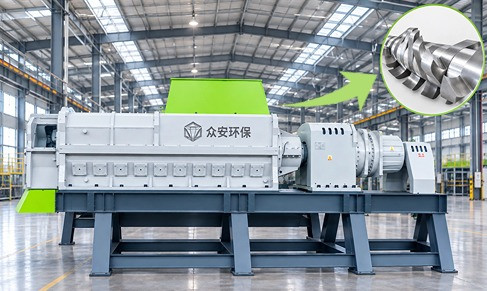
Textile Waste to RDF Production Line: How to Turn Textile Waste into Alternative Fuel?
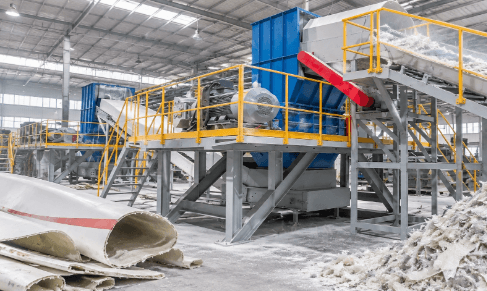
Solving Glass Fiber Dust Hazards and Rapid Blade Wear in End-of-Life Wind Rotor Recycling Plants

E Waste Shredder in South Africa for PCB and Electronic Waste Recycling
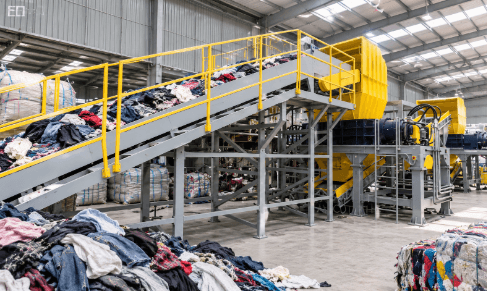
High-Capacity Textile Shredding Solutions: From Baled Garments to Clean Shoddy Fiber Opening


 中文


