
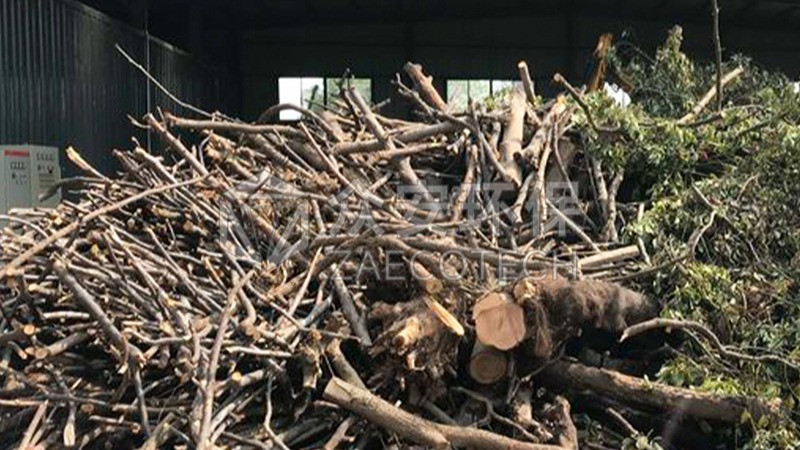
Tree branches, logs, and forestry residues are valuable biomass resources, but processing them efficiently can be difficult. Their irregular shapes, large dimensions, and bulky volumes create challenges for collection, transportation, and further utilization.
High transportation costs
Unprocessed branches and logs occupy considerable space. Trucks may reach their loading-volume limits before reaching their maximum payload capacity. This means businesses can spend more on transporting low-density wood waste than necessary.
High labor requirements
Large branches and logs are difficult to handle manually. Sorting, cutting, loading, and transferring materials often require additional workers and handling equipment, increasing operating costs and slowing down processing.
Difficult size reduction
Wood materials vary in diameter, length, moisture, and hardness. Ordinary equipment may struggle to maintain stable operation when processing bulky or irregular feedstock.
For wood recycling facilities, biomass power plants, and forestry waste processors, an industrial branch and log shredder provides a practical way to reduce material size before transportation or further processing.
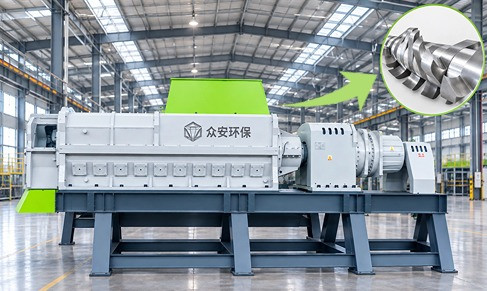
A high-capacity twin-shaft shredder is designed to process bulky biomass through low-speed shearing and tearing. Rather than relying on high-speed impact alone, its rotating blade shafts work together to cut and tear incoming materials into smaller pieces.
ZAECOTECH's industrial biomass shredder adopts a twin-shaft configuration. Its low-speed rotor and blade arrangement help process agricultural residues, wood waste, and forestry materials. The cutting chamber, motor, gearbox, frame, and intelligent operation and maintenance control system form the main equipment structure.
For branch and log processing, this configuration offers several practical benefits:
Strong cutting action: Two rotating shafts work together to shear and tear wood materials.
Suitable for bulky feedstock: The twin-shaft structure is designed for demanding biomass size-reduction applications.
Continuous processing: Industrial equipment supports regular production when matched with suitable feeding and discharge systems.
Reduced manual handling: Mechanical feeding and shredding can reduce the need for workers to manually cut and prepare every piece of wood.
For projects involving particularly large or thick logs, the feeding method and machine configuration should be confirmed according to the actual material dimensions. Maximum log diameter should not be assumed without an engineering assessment.
Blades are among the most important working components in a wood shredder. When processing branches, logs, and forestry residues over long operating periods, cutting components are exposed to repeated impact, friction, and abrasion.
Blade wear can gradually affect cutting performance and increase maintenance requirements. Choosing an appropriate blade configuration is therefore important for long-term operating efficiency.
ZAECOTECH provides customized blade configurations for different biomass materials. For wood waste applications, the blade design and material should be selected according to wood hardness, moisture, contamination, and expected operating hours.
A suitable wear-resistant blade configuration can help:
Maintain effective cutting performance during continuous operation.
Reduce premature wear caused by unsuitable blade selection.
Extend the service interval when processing conditions allow.
Reduce maintenance interruptions and associated labor requirements.
It is also important to consider the condition of incoming materials. Soil, stones, and metal contaminants can accelerate component wear. Removing avoidable impurities before shredding helps protect the cutting system.
Rather than focusing only on the initial blade price, buyers should evaluate blade durability, replacement accessibility, maintenance procedures, and the total operating cost over the equipment's service life.
Processing capacity is a key factor when selecting an industrial branch and log shredder. A machine that is too small may create a production bottleneck, while an oversized model can increase the initial investment and operating costs.
ZAECOTECH's industrial biomass shredder series offers four twin-shaft models with different capacity ranges.
| Model | Processing Capacity | Output Size | Equipment Type |
|---|---|---|---|
| S522 | 15–25 t/h | 50–100 mm | Twin-shaft shredder |
| S535 | 25–38 t/h | 50–100 mm | Twin-shaft shredder |
| S550 | 35–55 t/h | 50–100 mm | Twin-shaft shredder |
| S570 | 50–75 t/h | 50–100 mm | Twin-shaft shredder |
When selecting a model, buyers should consider:
The average and peak volume of branches and logs generated each day.
The dimensions and hardness of incoming wood.
The required output size for transportation or downstream processing.
Available feeding and conveying equipment.
Expected operating hours and future capacity requirements.
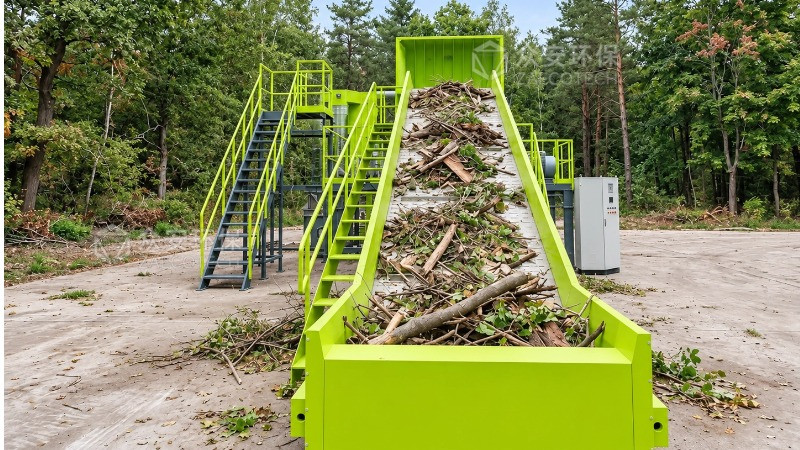
For large-scale operations, a complete feeding and conveying arrangement can help maintain a more consistent material supply and reduce manual handling.
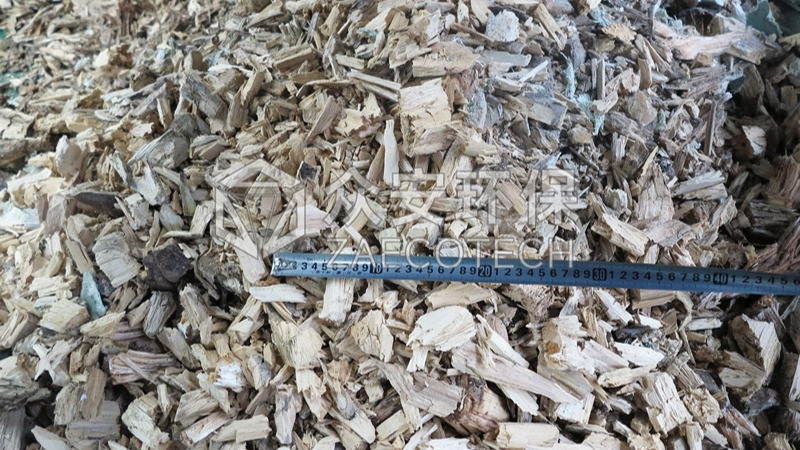
Shredding is an important preparation stage in wood waste recycling. Reducing bulky materials into smaller, more manageable pieces makes transportation, storage, and downstream processing easier.
Depending on the output requirements, shredded wood can be directed to several applications.
Biomass power generation
Shredded branches and wood residues can be used as biomass fuel feedstock. Consistent material size helps prepare the feedstock for subsequent fuel handling and processing systems.
Wood pellet production
Shredded wood can enter further processing, such as fine grinding, drying, and pelletizing. The standard 50–100 mm output from the biomass shredder is a preparation stage, not finished pellet material.
Biomass gasification and chemical conversion
Properly prepared biomass can serve as feedstock for gasification and other biomass conversion processes. Final particle size, moisture, and material composition must meet the requirements of the selected downstream technology.
Composting and landscaping mulch
Branches and green waste can also be shredded for composting or mulch production. Smaller pieces are easier to handle and can support subsequent biological or landscaping applications.
The most suitable recycling route depends on the wood source, local demand, fuel specifications, and available downstream equipment.
Choosing an industrial shredder involves more than comparing processing capacity. Equipment configuration, blade selection, feeding conditions, maintenance accessibility, and after-sales support all affect long-term performance.
ZAECOTECH provides industrial branch and log shredding equipment and customized configurations for wood waste, forestry residues, and agricultural biomass.
Twin-shaft shredding configurations for industrial biomass processing.
Multiple capacity options from 15 to 75 t/h.
Standard output size of 50–100 mm.
Customized blade configurations based on material requirements.
Engineering support for equipment selection and project configuration.
Technical assistance through email, phone, and video guidance, with onsite engineers available for major installations when required.
To recommend a suitable branch and log shredder, our team needs to understand your material type, log and branch dimensions, required capacity, target output size, and downstream application.
Textile Waste to RDF Production Line: How to Turn Textile Waste into Alternative Fuel?
Solving Glass Fiber Dust Hazards and Rapid Blade Wear in End-of-Life Wind Rotor Recycling Plants
E Waste Shredder in South Africa for PCB and Electronic Waste Recycling
High-Capacity Textile Shredding Solutions: From Baled Garments to Clean Shoddy Fiber Opening


 中文


