
India’s rapid solar energy expansion across states like Gujarat, Rajasthan, Karnataka, and Tamil Nadu has propelled the country into one of the world’s largest photovoltaic (PV) markets. However, alongside massive utility-scale installations and domestic module manufacturing, India faces a growing wave of defective production panels, storm-damaged modules, and early-generation end-of-life solar panels.
With the Ministry of Environment, Forest and Climate Change (MoEFCC) and the Central Pollution Control Board (CPCB) officially bringing solar PV modules under the E-Waste (Management) Rules, open dumping and unscientific disposal are strictly prohibited. Implementing a dedicated solar panel recycling plant in India using dry mechanical separation is the most compliant and profitable way to recover high-purity silver, silicon, copper, aluminum, and tempered glass.
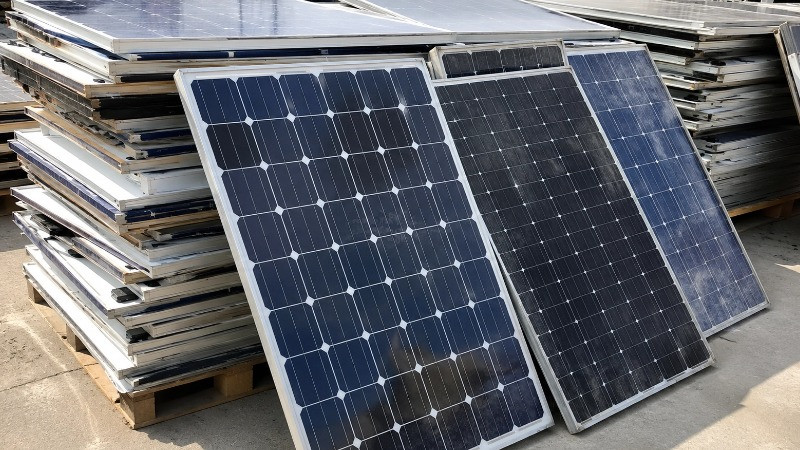
Managing end-of-life PV modules in India involves urgent regulatory, environmental, and operational pressures:
Strict CPCB E-Waste & EPR Compliance: Under India’s updated E-Waste Rules, solar manufacturers, importers, and project developers must fulfill Extended Producer Responsibility (EPR) targets through CPCB-authorized recyclers. Illegal landfilling or informal acid leaching carries heavy financial penalties and license revocations.
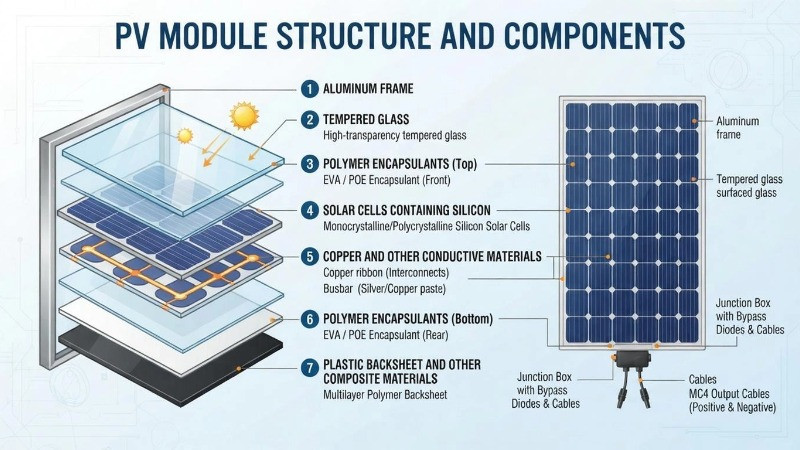
Tough Multi-Layer Composite Construction: A standard crystalline silicon solar panel is tightly laminated with an anodized aluminum frame, junction box, tempered glass, Ethylene Vinyl Acetate (EVA) encapsulant, solar cells (containing silver, silicon, and copper), and a fluoropolymer backsheet. Manual dismantling takes too long, poses severe glass-cut safety hazards, and fails to separate laminated layers.
Severe Chemical & Dust Pollution Risks: Traditional thermal incineration releases toxic fluorinated gases, while chemical acid leaching creates hazardous liquid effluents that struggle to secure State Pollution Control Board (SPCB) Consent to Establish (CTE) and Consent to Operate (CTO).
To secure fast environmental approvals and maximize material recovery, the ZAECOTECH Solar Panel Recycling Plant utilizes a 100% dry physical mechanical separation process:
Zero Wastewater & Zero Chemical Reagents: Unlike acid leaching or pyrolysis, dry mechanical processing operates entirely without chemical solvents, water discharge, or hazardous gas emissions—streamlining CPCB and SPCB environmental clearances across India.
Closed-Loop Negative-Pressure Dust Control: Fine glass and silicon powders generated during crushing and grinding are captured by enclosed negative-pressure piping and high-efficiency pulse-jet baghouse dust collectors, achieving over 99% dust collection efficiency and ensuring a clean, worker-safe factory floor.
Low Energy Consumption & High Automation: A fully automated PLC-controlled line requires only 2 to 3 operators per shift, slashing labor expenses by over 70% compared to semi-manual dismantling workshops.
The ZAECOTECH recycling line achieves an overall material recovery rate of 95% to 98% through a multi-stage precision separation workflow:
Automated Frame & Junction Box Removal: Automatic dismantling machines strip aluminum frames and junction boxes cleanly at a speed of 60 to 120+ panels per hour, achieving >99% aluminum recovery without damaging the glass edge.
High-Efficiency Glass Stripping: Specialized mechanical glass-removal units separate tempered glass from the EVA-laminated solar cell sheet, yielding clean cullet glass with >95% recovery efficiency.
Multi-Stage Crushing & Fine Grinding: The remaining EVA, backsheet, silicon wafer, and metal ribbon composite undergoes precision shearing and grinding to liberate individual material particles cleanly.
Gravity & Electrostatic Separation: Integrated airflow gravity separators and high-voltage electrostatic separators divide the fine powder into distinct high-purity fractions: silicon powder, silver-copper metallic concentrate, and polymer backsheet/EVA flakes.
Rather than relying on a single machine, a high-efficiency PV recycling facility operates as an integrated modular system. ZA ECOTECH customizes each production line based on your local panel collection volume, module types (monocrystalline, polycrystalline, or dual-glass), and available workshop footprint:
Automatic Dismantling Unit: Precision frame-stripping and junction-box removal machines designed to handle standard framed solar panels smoothly without glass breakage.
Glass Stripping & Crushing Module: Heavy-duty mechanical peeling and multi-stage shearing units that cleanly separate tempered glass cullet from the laminated cell sheet.
Fine Grinding & Liberation System: Controlled-speed pulverizers that grind the remaining EVA, backsheet, and wafer composite into uniform fine particles for downstream sorting.
Multi-Stage Separation & Sorting Unit: Integrated vibrating screens, airflow gravity separators, and high-voltage electrostatic separators that isolate pure silicon powder, silver-copper metallic concentrates, and polymer flakes.
Centralized PLC & Dust Control System: Automated PLC cabinet for one-button start/stop and overload protection, paired with pulse-jet baghouse dust collectors to maintain a dust-free, CPCB-compliant workshop.
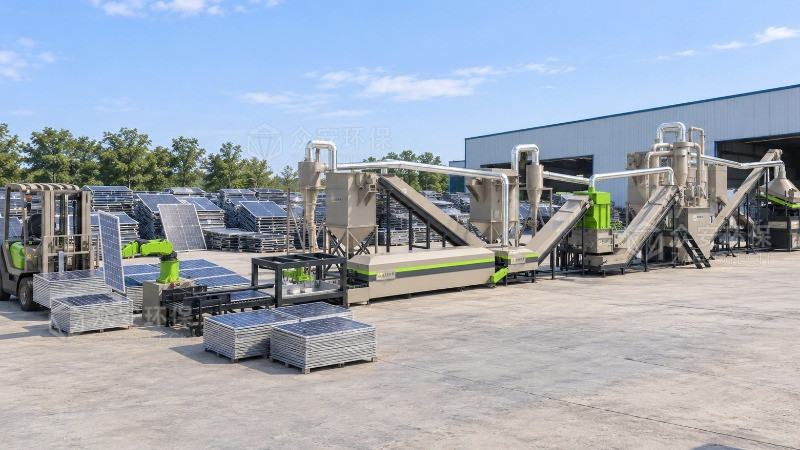
Setting up a CPCB-compliant, high-ROI solar panel recycling facility in India requires matching plant capacity, dismantling automation, and electrostatic separation precision to your local feedstock supply.
ZAECOTECH delivers complete turnkey solutions—from custom factory layout engineering and equipment manufacturing to sea freight delivery to major Indian ports (Mundra, Nhava Sheva, Chennai), on-site installation, and operator training.
Planning to launch or upgrade a solar panel recycling plant in India? Contact the ZAECOTECH engineering team today to request customized equipment specifications and a comprehensive project quotation.
Textile Waste to RDF Production Line: How to Turn Textile Waste into Alternative Fuel?
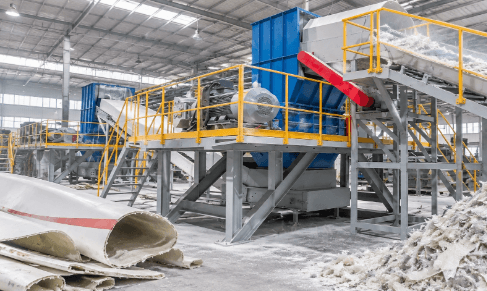
Solving Glass Fiber Dust Hazards and Rapid Blade Wear in End-of-Life Wind Rotor Recycling Plants
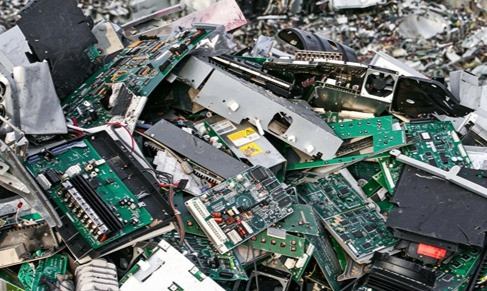
E Waste Shredder in South Africa for PCB and Electronic Waste Recycling
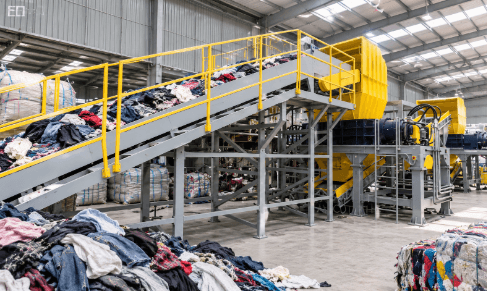
High-Capacity Textile Shredding Solutions: From Baled Garments to Clean Shoddy Fiber Opening


 中文


