
Modern material recovery facilities (MRFs), waste-to-energy plants, and industrial recycling operations face a relentless challenge at the front end of their processing lines: raw, unsorted waste arrives on the tipping floor in massive, unpredictable volumes. From compacted municipal solid waste (MSW) bags and bulky household furniture to tangled commercial packaging, root balls, and light scrap metal, incoming feedstocks contain hidden uncrushable contaminants and extreme structural variations. When raw waste is fed directly into high-speed secondary shredders, optical sorters, or trommel screens without proper primary size reduction, facilities experience devastating mechanical shock loads, frequent rotor jams, blinded screens, and costly unplanned downtime.
Serving as the critical mechanical gatekeeper of the entire recycling plant, a purpose-built hydraulic primary shredder transforms erratic, bulky waste streams into a consistent, homogenized, and liberated material flow. Unlike rigid electromechanical drivetrains that suffer severe gear damage or motor burnouts when encountering sudden torque spikes, closed-loop hydrostatic drives deliver unmatched rotational torque at ultra-low speeds while absorbing extreme shock loads smoothly. Deploying heavy-duty high-torque hydraulic pre-shredders—engineered with independent dual-shaft hydrostatic motors, aggressive hook-profile cutting tools, asynchronous shaft rotation, and intelligent PLC pressure-reversal controls—protects downstream machinery, maximizes sorting purity, and guarantees continuous multi-shift plant availability. This technical guide examines primary pre-shredding rheology, hydrostatic drive physics, component liberation dynamics, and plant integration layouts to boost plant uptime and downstream sorting efficiency.
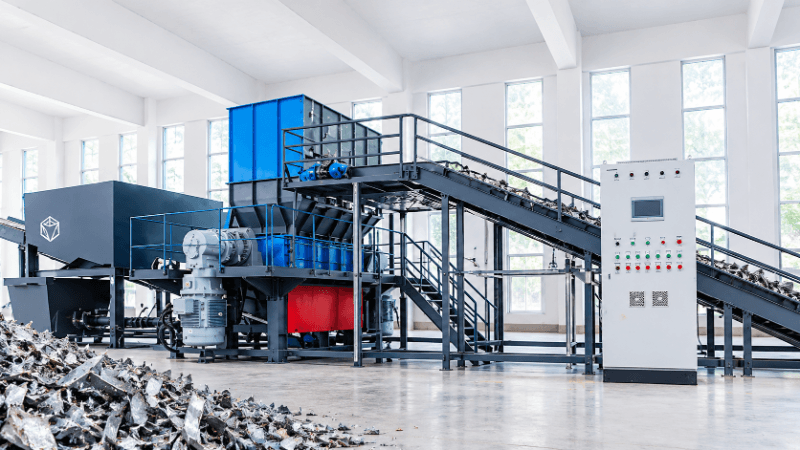
To understand why a dedicated hydraulic primary shredder is indispensable at the head of a recycling line, plant engineers must examine the operational hazards present on industrial tipping floors:
Severe Shock Loads and Tramp Metal Hazards: Unsorted commercial and municipal waste routinely conceals solid steel bars, engine components, concrete blocks, and heavy hardwood timbers. In rigid gear-driven machines, striking an uncrushable object generates instant inertial shock waves that shear drive shafts, crack gearbox housings, and shatter cutting blades.
Closed Containers and Compaction Bridging: Sealed garbage bags, baled plastics, and entangled textiles hide valuable recyclables from downstream optical and magnetic separators while forming dense structural arches that bridge across standard hopper openings.
Surge Feeding and Downstream Starvation: Front-end loaders and grapple cranes inevitably dump waste in massive, intermittent batches. Without a primary metering and sizing buffer, downstream conveyors, ballistic separators, and secondary fine shredders suffer alternating surges of severe overfeeding and idle starvation.
Long Film and Wire Entanglement: Uncut strapping bands, agricultural films, and steel wires wrap rapidly around downstream trommel screens, disc screen shafts, and conveyor rollers, forcing maintenance crews to halt the entire plant for hazardous manual cutting.
Delivering uninterrupted primary size reduction under extreme load fluctuations requires a specialized hydrostatic and mechanical architecture built for massive force multiplication and instant overload protection:
Instead of relying on traditional electric motors coupled to fragile high-ratio mechanical gearboxes, hydraulic primary shredders utilize high-pressure axial piston pumps driving high-displacement radial piston hydraulic motors mounted directly to the rotor shafts. Because hydraulic fluid acts as an inherently cushioned power transmission medium, the drivetrain absorbs sudden impact spikes seamlessly without mechanical gear teeth clashing or motor windings overheating.
Each cutting rotor is powered by its own dedicated hydraulic circuit, allowing the two shafts to rotate at slightly different speeds or even in opposing directions independently. This asynchronous kinematic profile creates a continuous tearing, ripping, and self-cleaning action that prevents bulky mattresses, carpets, and plastic bales from floating on top of the rotors.
Operating at intentionally slow rotational speeds (typically 8 to 22 RPM), the hydraulic drivetrain converts high fluid pressure into immense rotational torque. This low-speed, high-force cutting profile slices effortlessly through thick timber, bundled plastics, and light steel profiles while eliminating high-speed flying projectiles, minimizing airborne dust, and keeping operating temperatures well below fire ignition thresholds.
Equipped with high-speed pressure transducers monitored continuously by the central PLC, the system tracks hydraulic circuit pressure in real time. The instant an uncrushable steel block wedges between the rotors, pressure spikes trigger an automatic shaft reversal within milliseconds—without needing to overcome the heavy rotational inertia of a spinning electric motor flywheel—cleanly backing out the obstruction before resuming forward shredding.
The table below summarizes shock load tolerance, reversal speed, feed metering control, and overall plant uptime across standard electromechanical shredders versus heavy-duty hydraulic primary shredders:
| Performance Metric | Electromechanical Gear-Driven Shredders | High-Torque Hydraulic Primary Shredders |
|---|---|---|
| Shock Load & Tramp Metal Tolerance | Rigid gear trains absorb full impact shock, risking broken gear teeth and sheared shafts. | Cushioned Hydrostatic Power absorbs extreme shock loads without drivetrain damage. |
| Overload Reversal Response | High rotor inertia delays motor braking and reversal, prolonging mechanical jams. | Millisecond Pressure-Triggered Reversal backs out obstructions instantly with zero inertia lag. |
| Speed & Torque Adjustability | Fixed rotational speed; cannot adapt torque dynamically to changing waste density. | Infinitely Variable Speed & Torque automatically adjusts to match material resistance. |
| Downstream Metering Control | Discharges material in uneven surges when bulky batches break apart suddenly. | Controlled Discharge Metering delivers a steady, uniform carpet to sorting lines. |
Installing a hydraulic primary shredder upstream transforms the performance metrics of every subsequent machine in the recycling facility:
Complete Bag Opening and Component Liberation: Aggressive hook-shaped cutting tools rupture 100 percent of sealed garbage bags and compressed bales without pulverizing glass or crushing aluminum cans into flat sheets. Liberated items spread evenly across sorting belts, allowing near-infrared (NIR) optical sorters to achieve recovery purity rates above 90 percent.
Higher Ferrous and Non-Ferrous Extraction Yields: By tearing apart composite assemblies—such as wooden furniture with steel brackets or appliances with copper wiring—the pre-shredder physically frees trapped metals. Downstream overband magnets and eddy current separators extract clean metal fractions rather than dragging entangled plastic waste into scrap bins.
Elimination of Screen Blinding and Wrapping: Sizing long strapping tapes, textiles, and plastic films down to uniform 150 mm to 300 mm lengths prevents material from wrapping around downstream disc screen shafts and trommel lifters, cutting daily maintenance cleaning hours by up to 70 percent.
Protection and Capacity Boost for Secondary Fine Shredders: In Refuse-Derived Fuel (RDF) plants, feeding pre-shredded, metal-free, and consistently metered material into secondary single-shaft fine shredders increases secondary throughput by up to 30 percent while extending fine cutter life dramatically.
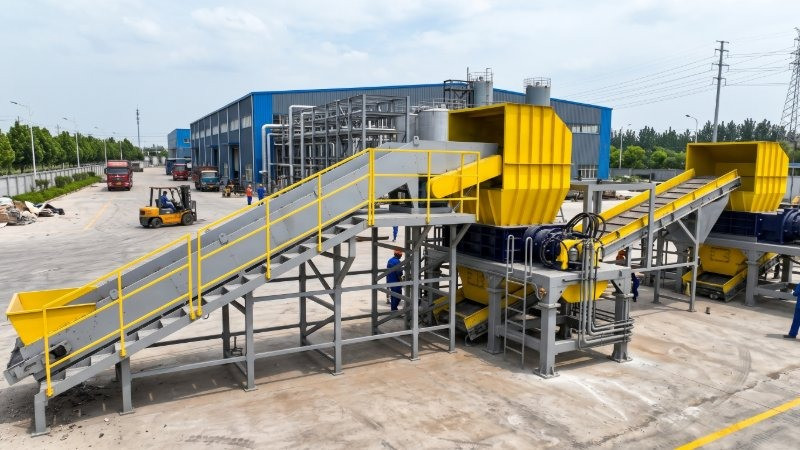
Operating continuously on raw, abrasive municipal and industrial waste streams demands rugged structural fabrication and wear-resistant cutting metallurgy:
Forged Alloy Tool Steels with Hardfacing: Cutting rotors utilize heavy-duty forged alloy steel shafts fitted with replaceable cutting disks or weld-on hardfaced teeth heat-treated to 54–58 HRC. When teeth eventually wear down from abrasive sand and concrete grit, modular bolted segments or on-shaft hardfacing welding allow rapid refurbishment without dismantling the entire rotor assembly.
Stationary Counter-Combs and Scraper Bars: Heavy-duty stationary counter-knives and comb scrapers interlock closely with the rotating disks, providing rigid shear points for tough plastics while continuously stripping sticky organic and fibrous residues off the rotors.
Outboard Bearing Isolations: Oversized spherical roller bearings are mounted externally in heavy split plummer blocks, completely separated from the dirty cutting chamber by open atmospheric gaps and multi-stage grease-purged labyrinth seals to prevent moisture, leachate, and abrasive grit infiltration.
A high-availability recycling or RDF preparation plant integrates the hydraulic primary shredder as the central anchor of an automated material recovery workflow:
Stage 1: Heavy Apron Feeding: Raw, unsorted waste is loaded via grapple crane or wheel loader onto a heavy-duty steel apron conveyor equipped with variable speed control, metering waste steadily into the hydraulic shredder hopper.
Stage 2: High-Torque Hydrostatic Pre-Shredding: The dual-shaft hydraulic rotors tear open bags, fracture bulky items, and reduce the waste stream into uniform 150 mm to 300 mm coarse fractions while automatically reversing to clear uncrushable tramp metal.
Stage 3: Primary Magnetic Separation and Trommel Screening: Discharged material passes beneath a suspended cross-belt overband magnet to extract liberated ferrous scrap before entering a rotary trommel or ballistic separator to segregate organics, 3D recyclables, and 2D high-calorific fuel fractions.
Stage 4: Secondary Optical Sorting or Fine RDF Granulation: Clean 3D rigid plastics proceed to automated NIR optical sorters for polymer recovery, while the metal-free 2D fraction is routed to secondary fine shredders to produce uniform 30 mm to 50 mm RDF flakes.
Achieving high profitability and operational stability in modern waste processing begins with controlling the chaotic nature of incoming raw feedstocks. Deploying a high-torque hydraulic primary shredder—engineered with closed-loop hydrostatic drives, independent asynchronous rotors, millisecond pressure-reversal protection, and rugged wear-resistant tooling—eliminates front-end bottlenecks, shields expensive downstream sorting equipment from shock damage, and ensures a steady, liberated material stream. This robust engineering foundation maximizes plant uptime, elevates recycling recovery rates, and delivers long-term operational resilience for waste management facilities worldwide.
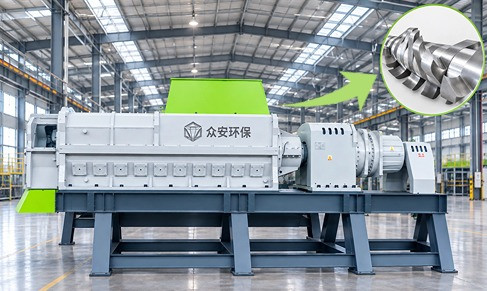
Textile Waste to RDF Production Line: How to Turn Textile Waste into Alternative Fuel?
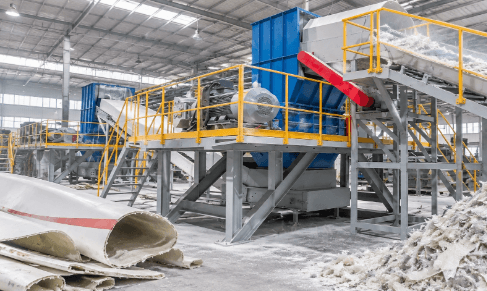
Solving Glass Fiber Dust Hazards and Rapid Blade Wear in End-of-Life Wind Rotor Recycling Plants

E Waste Shredder in South Africa for PCB and Electronic Waste Recycling
High-Capacity Textile Shredding Solutions: From Baled Garments to Clean Shoddy Fiber Opening


 中文


