
A waste segregation machine in India helps waste treatment facilities separate mixed municipal solid waste, recover valuable materials, and improve recycling efficiency. As India generates approximately 160,000 tonnes of municipal solid waste (MSW) daily, efficient waste sorting has become increasingly important for municipal authorities and recycling businesses.
Although around 80% of urban MSW is reported to be processed, challenges such as mixed waste composition, insufficient source segregation, and low recovery efficiency remain. With India's Solid Waste Management Rules, 2026 requiring four-way waste segregation at source, the demand for efficient mechanical sorting systems is growing.
So, how can an automated waste segregation system help Indian waste treatment projects reduce operating costs and improve resource recovery?
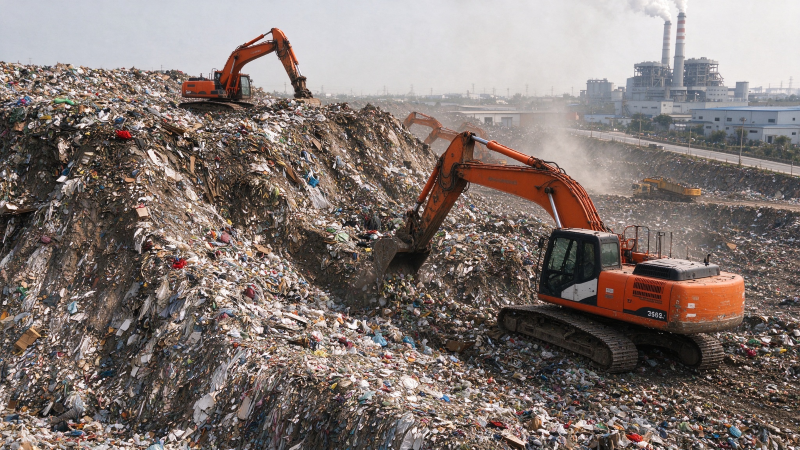
Municipal waste segregation in India faces several challenges that affect sorting efficiency and recycling quality.
Mixed waste composition: Food waste, plastics, paper, metals, textiles, and inert materials are often mixed together, making separation difficult.
High labor requirements: Manual sorting requires many workers and makes it difficult to maintain consistent processing efficiency.
High moisture content: Wet organic waste can contaminate paper and plastics, reducing their recycling value.
Low resource recovery: Without effective separation, valuable recyclables and combustible materials may end up in residual waste, increasing disposal costs.
To address these problems, waste treatment facilities need mechanical sorting equipment that combines screening, magnetic separation, air classification, and manual picking. This approach reduces dependence on manual labor while improving material recovery.
A waste segregation machine uses multiple separation technologies to process mixed waste into different material fractions. ZAECOTECH's Semi-Automatic MSW Sorting Line integrates several key machines to meet different municipal waste sorting requirements.
1. Waste Bag Opener and Feeding Conveyor
The bag opener breaks open waste bags and releases the materials inside. The feeding conveyor then delivers waste steadily to the sorting line.
2. Trommel Screen
The trommel screen separates materials according to particle size. Fine organic-rich materials and small particles pass through the screen, while larger materials continue to subsequent sorting stages.
3. Self-Cleaning Magnetic Separator
Using permanent magnets, the magnetic separator continuously removes ferrous metals such as iron and steel. This recovers valuable metals and helps protect downstream shredders from metal damage.
4. Air Separator
The air separator uses adjustable airflow to separate lightweight materials, such as suitable plastics and textiles, from heavier fractions. Its negative-pressure design also helps control dust leakage.
Operators remove remaining impurities and selected recyclable materials after mechanical separation, improving the quality of recovered materials.
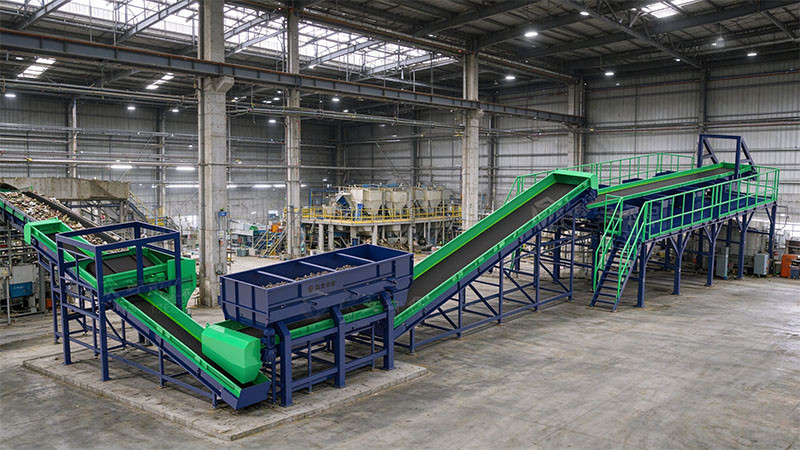
Flexible configuration: Equipment combinations can be customized according to waste composition and sorting requirements.
Customizable capacity: Reference processing capacity ranges from 100 to 1,000 tons per day.
High sorting performance: The manufacturer lists a recyclables recovery rate of over 85% and organic purity of at least 95% under specified operating conditions.
Reduced labor requirements: Approximately 3–8 operators, depending on automation level and line configuration.
Improved working environment: Enclosed screening and negative-pressure air separation help control dust.
These features make the system suitable for municipal waste sorting centers, material recovery facilities (MRFs), and other recycling projects.
Effective waste segregation does more than separate materials. It prepares different waste fractions for recycling, energy recovery, and appropriate disposal.
Organic Waste – Composting and Biogas Production
Food waste, fruit and vegetable residues, and other suitable organic materials can be sent for composting or anaerobic digestion. These processes produce soil-improving products or biogas for energy applications.
Plastic Waste – Material Recycling
Recovered plastics can undergo further sorting, cleaning, and shredding before entering plastic recycling facilities. Better separation helps improve the quality of recycled plastic feedstock.
Paper and Cardboard – Paper Recycling
Suitable paper and cardboard can be collected and sent to paper mills for recycling, reducing contamination and improving their value as secondary raw materials.
Ferrous Metals – Metal Recovery
Iron and steel are recovered through magnetic separation and sold to metal recycling companies, generating additional value while reducing metal content in residual waste.
Combustible Residues – RDF Production
Suitable combustible materials, including selected plastics, textiles, and paper residues, can be further shredded, dried, and processed into Refuse-Derived Fuel (RDF). The finished fuel can be supplied to cement kilns and other industrial users as an alternative fuel.
By directing each material fraction to the appropriate downstream process, a waste sorting plant can improve resource utilization, generate potential revenue, and reduce the volume of waste requiring final disposal.
Choosing the right waste segregation machine requires considering more than processing capacity. The following factors help determine the appropriate system configuration.
1. Processing Capacity
Determine the daily waste volume and operating hours. ZAECOTECH offers customized MSW sorting lines with reference capacities ranging from 100 to 1,000 tons per day.
2. Waste Composition
Analyze the proportions of organic waste, plastics, metals, paper, and inert materials. Different waste streams require different screening and separation methods.
3. Sorting Targets
Identify the materials to be recovered and their required quality. For example, an RDF production project may need additional combustible material separation and downstream shredding equipment.
4. Automation Level
Semi-automatic systems combine mechanical sorting with manual picking. Projects requiring higher throughput and less manual intervention can consider integrating optical sorting equipment or AI sorting robots.
5. Site Conditions and Operating Costs
Available floor space, power supply, equipment layout, maintenance requirements, and downstream processing facilities should all be considered before selecting a system.
ZAECOTECH provides customized solid waste sorting and recycling solutions for different waste types and project requirements. Its MSW sorting systems integrate screening, magnetic separation, air classification, conveying, and manual or automated sorting technologies.
With modular equipment configurations and project-based process design, providing solutions for municipal waste sorting centers, MRFs, landfill waste treatment, and RDF production projects.
From equipment selection and manufacturing to technical support, ZAECOTECH helps customers build efficient waste sorting systems that improve material recovery and support long-term operations.

How Can a Municipal Solid Waste Sorting System in Vietnam Improve Recycling Efficiency?
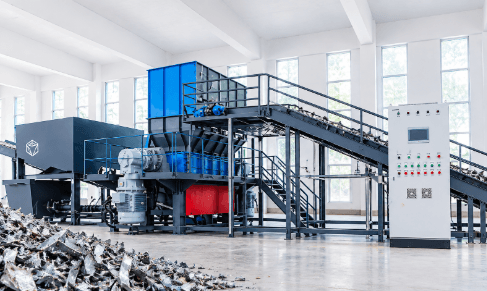
Boost Plant Uptime and Downstream Sorting Efficiency With High-Torque Hydraulic Pre-Shredders

How MSW Pre-Shredders Optimize Municipal Solid Waste Sorting and RDF Production
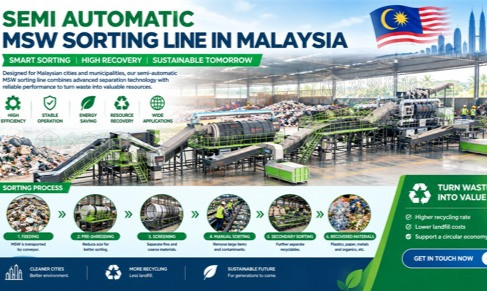
Why Choose a Semi Automatic MSW Sorting Line in Malaysia?


 中文


