
Chemical manufacturing plants, pharmaceutical refineries, automotive paint shops, and hazardous waste treatment facilities generate continuous streams of contaminated steel drums, HDPE chemical barrels, intermediate bulk containers (IBCs), aerosol cans, and solvent-soaked packaging. Before these hazardous containers can be safely fed into high-temperature hazardous waste rotary kilns or specialized thermal desorption units, they must undergo mechanical size reduction to liberate trapped liquids, equalize calorific heat loads, and meet strict kiln feed-chute dimensions. However, shredding sealed or partially filled chemical containers represents one of the highest-risk mechanical operations in industrial waste management.
Standard electric waste crushers pose catastrophic fire, explosion, and environmental poisoning hazards when processing hazardous waste. High-speed metal-on-metal friction generates incandescent sparks capable of igniting residual flammable solvent vapors, while unsealed hoppers allow volatile organic compounds (VOCs) and toxic aerosols to escape into the plant atmosphere. Deploying purpose-built explosion-proof hazardous waste shredders—engineered with closed-loop hydraulic drivetrains, continuous nitrogen inerting blankets, non-sparking bronze-alloy wear components, and double-sealed negative-pressure containment housings—enables hazardous waste operators to shred volatile chemical drums safely. This technical guide examines vapor-phase ignition physics, closed-loop hydrostatic torque drives, nitrogen oxygen-displacement systems, and ATEX-compliant containment engineering for hazardous chemical container shredding.
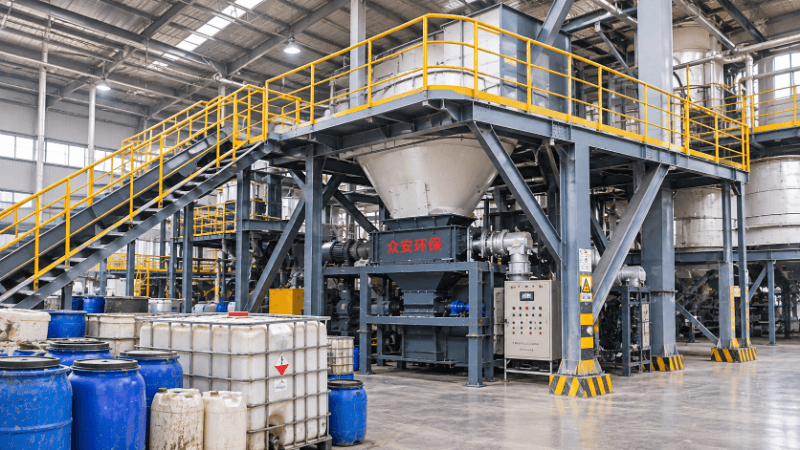
To engineer an intrinsically safe size-reduction system for contaminated chemical drums, solvent cans, and laboratory waste, facility engineers must neutralize four distinct physical and chemical dangers:
Flammable Vapor Ignition and Confined Deflagration: Sealed 200-liter steel drums and plastic jerrycans frequently retain residual acetone, toluene, xylene, alcohols, or hydrocarbon sludges. The moment a shredder punctures a container, volatile vapors mix with ambient oxygen inside the cutting chamber. Any mechanical spark, static discharge, or hot bearing surface exceeding the vapor’s auto-ignition temperature triggers an immediate explosion.
Friction Sparks From Steel Drum Chimes and Galvanized Rings: Heavy-gauge steel chemical barrels feature reinforced rolling hoops, steel locking rings, and bung plugs. Under high-speed impact or unlubricated shearing, steel-on-steel contact generates high-temperature friction sparks—creating an active ignition source directly inside a vapor-rich zone.
Toxic Aerosol Release and Fugitive VOC Emissions: Crushing pressurized containers, pesticide drums, or chlorinated solvent totes releases toxic mists and hazardous fumes. Without hermetic sealing and negative-pressure vapor extraction, these toxic gases leak past hopper flaps and rotor shaft seals, endangering plant personnel and violating strict environmental emission permits.
Corrosive Chemical Attack on Seals and Bearings: Strong acids, caustic alkalis, and aggressive organic solvents rapidly dissolve standard nitrile rubber shaft seals, strip conventional paint coatings, and pit carbon steel bearing races, leading to premature mechanical failure and hazardous leachate drips.
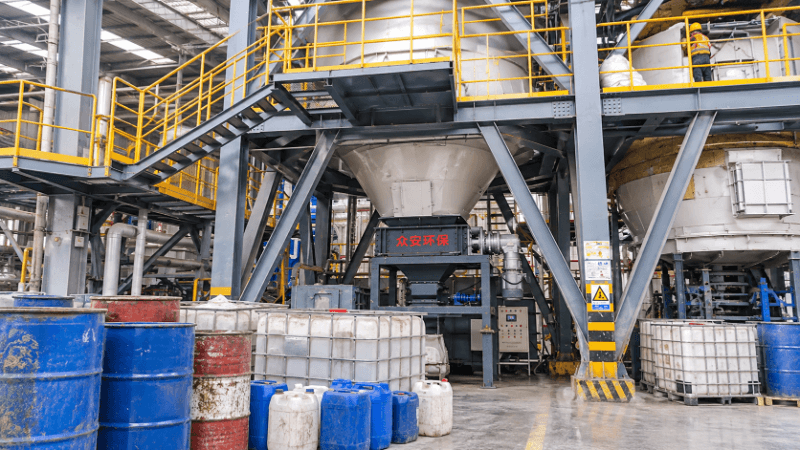
Eliminating ignition sources and containing toxic vapors across continuous hazardous waste operations requires a fully integrated, ATEX-compliant mechanical and atmospheric control architecture:
Rather than mounting high-voltage electric motors and dry friction clutches directly inside the hazardous shredding zone, specialized hazardous waste shredders utilize closed-loop radial piston hydrostatic motors bolted directly to the rotor shafts. The main electric-hydraulic power pack is isolated behind a blast-rated firewall or in a safe non-hazardous utility room. Operating at ultra-low speeds (typically 8 to 18 RPM) with massive hydraulic torque, the hydrostatic drive eliminates electrical arcing hazards, prevents high-speed frictional heating, and provides instantaneous millisecond pressure-relief reversal when encountering thick steel drum rims.
To make combustion physically impossible regardless of vapor concentration, the enclosed shredder chamber and airlock feed chute are continuously purged with industrial nitrogen gas. Redundant paramagnetic or zirconia oxygen analyzers mounted at multiple chamber elevations monitor internal oxygen levels in real time—maintaining O2 concentrations strictly below the Limiting Oxygen Concentration (typically under 5 to 8 percent). If oxygen levels rise above the safe setpoint, the PLC automatically halts feeding and floods the chamber with emergency nitrogen.
Operating at slow rotational speeds prevents kinetic impact sparking, while precision micro-gap shearing slices steel drum walls cleanly rather than tearing them violently. To further eliminate friction sparks during rotor-to-housing contact, internal scraper combs, guide strips, and airlock wiper blades are fabricated from non-sparking aluminum-bronze or copper-beryllium alloys, while external grounding straps continuously dissipate electrostatic charges.
To prevent toxic vapors from escaping during drum loading, the shredder features a fully enclosed, hydraulically actuated double-gate feed airlock chamber. Containers enter the upper airlock, the top hatch seals hermetically against chemically resistant FKM (Viton) gaskets, nitrogen purges the airlock, and only then does the lower gate open to drop drums onto the rotors. Simultaneously, an explosion-proof induced-draft blower maintains slight negative pressure inside the shredder, routing displaced vapors directly to an activated-carbon adsorption and wet chemical scrubber tower.
The table below summarizes ignition prevention, vapor containment, drive safety, and chemical resistance across standard industrial waste shredders versus specialized explosion-proof hazardous waste shredders:
| Safety & Engineering Metric | Standard Industrial Waste Shredders | ATEX Explosion-Proof Hazardous Waste Shredders |
|---|---|---|
| Ignition & Spark Prevention | High-speed impact and exposed electric motors create sparks and hot surfaces. | Remote Hydrostatic Drives & Nitrogen Inerting eliminate sparks and oxygen completely. |
| Toxic Vapor & VOC Containment | Open-top hoppers and single lip seals allow toxic fumes to leak into the workspace. | Double-Gate Airlocks & Negative-Pressure Scrubbing guarantee zero fugitive vapor leaks. |
| Chemical & Solvent Resistance | Standard rubber seals and carbon steel housings swell, dissolve, and corrode rapidly. | PTFE/Viton Double Mechanical Seals & 316L Stainless Cladding resist acids and solvents. |
| Emergency Overload & Fire Response | Mechanical shear pins or delayed motor trips risk prolonged friction against steel drums. | Millisecond Hydraulic Reversal & Automatic CO2/Water-Mist Suppression isolate threats instantly. |
Processing mixed chemical barrels, paint sludges, and corrosive industrial wastes requires specialized metallurgical protection and redundant shaft sealing:
Vacuum-Hardened High-Alloy Cutting Disks: Hook-profile cutting disks are forged from high-toughness, corrosion-resistant tool steels (such as modified D2 or high-chromium NiCrMo alloys) and vacuum heat-treated to 55–57 HRC—delivering the high impact toughness needed to shear thick steel drum chimes without chipping.
Stainless Steel Cladding and Hardox 500 Wear Liners: Internal hopper airlocks and vapor-contact zones are fabricated from or clad with 316L stainless steel to prevent acid and solvent corrosion, while high-wear cutting chamber walls are armored with bolt-on Hardox 500 wear plates.
Outboard Bearings With Dual PTFE/Viton Cartridge Seals: Spherical roller bearings are mounted completely outside the hazardous chamber behind open atmospheric air gaps. Rotor shaft penetrations utilize dual pressurized cartridge seals fitted with chemical-grade PTFE and FKM (Viton) elastomers—preventing both outward toxic gas leakage and inward oxygen ingress.
A modern hazardous waste preprocessing facility integrates explosion-proof shredding into a fully automated, remote-monitored thermal treatment line:
Stage 1: Automated Drum Indexing and Barcode/X-Ray Scanning: Palletized steel drums, plastic barrels, and IBC totes move along a grounded roller conveyor through automated weight, radiation, and X-ray screening stations to verify waste manifest compatibility before entering the shredding cell.
Stage 2: Nitrogen-Purged Double-Gate Airlock Feeding: Containers enter the sealed upper airlock chamber, where nitrogen purging displaces ambient air until internal oxygen sensors confirm sub-5-percent O2 levels prior to dropping the drums onto the cutting rotors.
Stage 3: Low-Speed Hydrostatic Pre-Shredding and Liquid Drainage: The twin-shaft hydrostatic shredder slices drums and containers into uniform 80 mm to 150 mm fragments under continuous nitrogen blanketing. Free liquids drain cleanly through a perforated bottom sump into explosion-proof pump tanks for liquid fuel blending.
Stage 4: Screw Conveying and Direct Rotary Kiln Injection: Shredded solid hazardous residues—steel shards, plastic fragments, and absorbed sludges—travel through a sealed, nitrogen-blanketed screw conveyor directly into the hazardous waste rotary kiln feed chute, while extracted chamber gases pass through multi-stage chemical scrubbers and thermal oxidizers.
Shredding hazardous chemical containers, solvent drums, and contaminated packaging leaves zero margin for mechanical or atmospheric error. By deploying purpose-built explosion-proof hazardous waste shredders—combining remote closed-loop hydrostatic drivetrains, continuous nitrogen oxygen-displacement systems, non-sparking bronze wear components, and double-gate airlock vapor containment—treatment facilities eliminate spark ignition sources and prevent toxic VOC emissions. This rigorous engineering standard protects personnel, ensures full regulatory compliance, and delivers consistent, safe feedstock for high-temperature hazardous waste incineration.
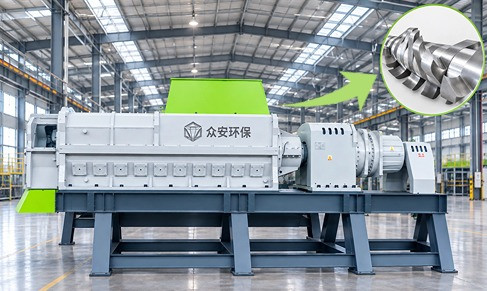
Textile Waste to RDF Production Line: How to Turn Textile Waste into Alternative Fuel?
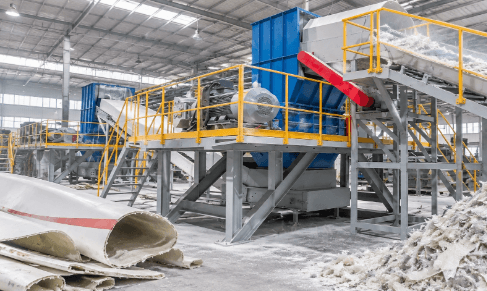
Solving Glass Fiber Dust Hazards and Rapid Blade Wear in End-of-Life Wind Rotor Recycling Plants
E Waste Shredder in South Africa for PCB and Electronic Waste Recycling
High-Capacity Textile Shredding Solutions: From Baled Garments to Clean Shoddy Fiber Opening


 中文


