
Flexible polypropylene (PP) and polyethylene (PE) packaging materials form the backbone of global industrial logistics, agriculture, and consumer goods distribution. Every day, packaging extrusion plants, distribution warehouses, chemical facilities, and agricultural cooperatives generate vast quantities of post-industrial PP film trimmings, off-spec cast and blown film rolls, heavy-duty woven polypropylene FIBC jumbo bulk bags, and baled pallet stretch wrap. Because post-industrial and post-commercial flexible polyolefins exhibit high polymer purity, they represent a highly lucrative feedstock for mechanical washing, densification, and re-pelletizing into high-grade PCR (Post-Consumer Recycled) and PIR (Post-Industrial Recycled) resin pellets.
However, converting dense, tightly wound film rolls, high-tenacity woven FIBC lifting loops, and compressed stretch-wrap bales into uniform, free-flowing flakes poses severe mechanical bottlenecks for conventional plastic recycling equipment. Standard granulators and high-speed hammer mills suffer catastrophic failure when fed whole film rolls or bundled FIBC bags—experiencing instant shaft wrapping, frictional polymer melting, and violent rotor stalls. Deploying purpose-built high-capacity industrial PP film shredders—engineered with low-speed high-torque planetary drivetrains, micro-gap scissor-shear cutting geometry, load-sensing hydraulic pusher rams, and dynamic anti-wrapping shaft seals—enables plastic recyclers to process whole bales and dense film rolls continuously without manual pre-cutting. This technical guide examines flexible polyolefin rheology, micro-gap shear kinematics, thermal friction control, and integrated washing-line workflows for optimizing high-capacity PP film and FIBC jumbo bag size reduction.
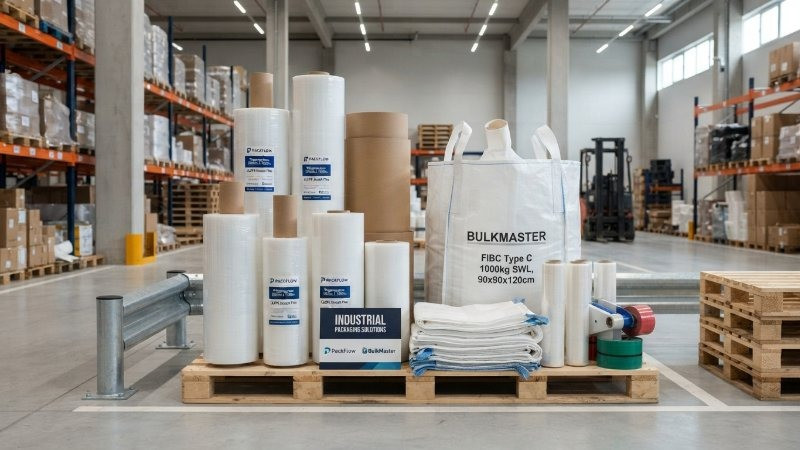
To engineer an uninterrupted, high-throughput size-reduction line for post-industrial film rolls, woven bulk sacks, and pallet wrap, plant operators must overcome four distinct polymer behaviors:
Extreme Tensile Strength in Woven FIBC Lifting Loops and Fabrics: Heavy-duty FIBC bulk bags are constructed from tightly woven, oriented polypropylene tapes reinforced with multi-layered polyester or PP webbing lifting straps designed to support over 1,000 kg. Under blunt impact or dull knives, these high-tenacity strips stretch without breaking and spiral tightly around rotating shafts, generating immense radial pressure that destroys bearing seals and seizes rotors.
Dense Solid Core Resistance in Off-Spec Film Rolls: Wound production film rolls behave like solid, semi-rigid plastic logs with high structural density, yet individual outer layers peel off rapidly as long, continuous ribbons. Conventional granulators stall instantly when attempting to bite into a solid roll, while loose ribbons wrap around rotor ends within seconds.
Low Softening Points and Frictional Polymer Melting: Polypropylene and linear low-density polyethylene (LLDPE) stretch films soften rapidly between 110 and 155 degrees Celsius. High-speed rotor friction elevates chamber temperatures past this threshold, melting films into sticky plastic agglomerates that glaze cutting edges, blind discharge screens, and degrade polymer melt flow index (MFI) values.
Low Bulk Density and Hopper Bridging in Loose Stretch Wrap: Unbaled warehouse stretch wrap and fluffy production edge trims trap large pockets of air. Without positive mechanical compression, loose films float above the cutting drum, causing severe hopper bridging and starving downstream friction washers.
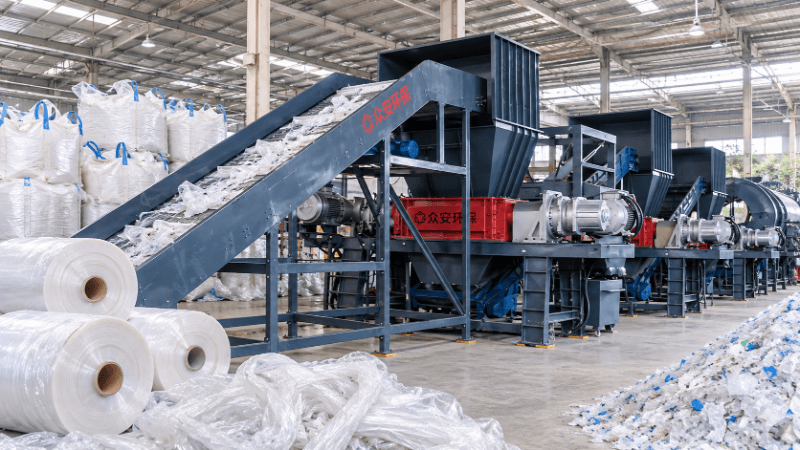
Transforming tightly compressed film bales, dense production rolls, and tough woven FIBC bags into uniform 30 mm to 60 mm flakes requires a specialized mechanical architecture focused on clean scissor shearing, zero thermal buildup, and positive feeding:
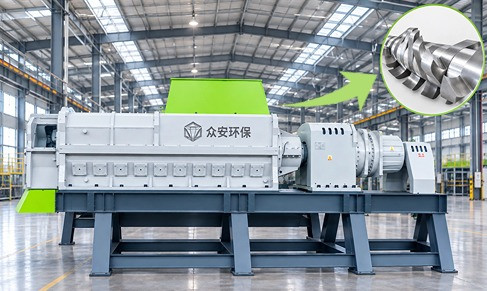
Rather than relying on blunt impact crushing, specialized PP film shredders execute a true precision scissor cut. Concave, four-way indexable rotor cutters pass stationary counter-knives with ultra-tight micro-gap clearances (typically 0.3 mm to 0.7 mm). This razor-sharp shearing geometry slices multi-layered FIBC webbing straps, thick film roll cores, and elastic stretch wrap cleanly on the first pass, eliminating long uncut tails that tangle downstream screw conveyors and friction washers.
Operating at controlled low rotational speeds (typically 55 to 85 RPM) driven by oversized, high-efficiency planetary reduction gearboxes, the shredder prioritizes immense rotational torque over blade tip velocity. Keeping tip speeds low prevents frictional heat accumulation inside the cutting chamber, ensuring flexible PP and LLDPE films remain cool, crisp, and free-flowing without melting or thermal degradation.
To eliminate manual bale breaking or roll unspooling, the shredder integrates a heavy-duty, PLC-regulated horizontal hydraulic pusher ram. Guided by real-time motor amperage telemetry, the ram presses whole compressed bales, bulky FIBC sacks, and dense film rolls steadily against the rotating cutting drum, maintaining maximum hourly throughput while automatically retracting if sudden torque spikes occur.
To guarantee zero plastic ribbon infiltration into mechanical drivetrains, the rotor ends feature machined steel scraper rings that mate closely with the housing sidewalls, physically blocking stray film strips from reaching the shaft journals. Outboard spherical roller bearings are isolated externally behind open atmospheric air gaps and multi-stage grease-purged labyrinth seals.
The table below summarizes shaft wrapping resistance, polymer melting control, whole-roll feeding capability, and downstream washing readiness across conventional high-speed plastic granulators versus specialized high-capacity PP film shredders:
| Performance Metric | Conventional High-Speed Granulators / Mills | High-Capacity Anti-Wrapping PP Film Shredders |
|---|---|---|
| Shaft Wrapping & Entanglement | Long film ribbons and FIBC straps wrap tightly around high-speed shafts within minutes. | Micro-Gap Scissor Cutters & Scraper Rings slice films and webbing cleanly with zero wrapping. |
| Polymer Melting & Screen Blinding | High tip speeds generate intense friction, melting PP/PE films and plugging screens solid. | Low-Speed High-Torque Kinematics keep operating temperatures cool to prevent melting. |
| Whole Roll & Bale Feeding | Requires labor-intensive manual guillotine cutting and bale breaking before feeding. | Load-Sensing Hydraulic Pusher Ram processes whole bales and film rolls directly. |
| Downstream Washing Performance | Produces tangled plastic balls that trap dirt and clog sink-float tanks and dryers. | Calibrated Perforated Screen Cradles deliver uniform 30–60 mm open flakes for deep washing. |
While clean post-industrial rolls exhibit minimal grit, post-commercial stretch wrap, agricultural silage films, and FIBC bags used for mineral or chemical transport carry embedded sand, calcium carbonate fillers, and occasional metal wire ties:
Vacuum-Hardened High-Alloy Indexable Cutters: Rotor knives and stationary bed blades are forged from premium high-carbon, high-chromium cold-work tool steels (such as D2 or DC53) and vacuum heat-treated to 56–58 HRC. Four-way indexable concave square inserts allow maintenance crews to rotate worn cutting edges 90 degrees four times before workshop regrinding, extending tool life fourfold while preserving tight micro-gap tolerances.
Hardox 500 Chamber and Pusher Armoring: Internal hopper sidewalls, hydraulic pusher guideways, and screen cradles are lined with replaceable, bolt-on Hardox 500 wear plates, protecting the main structural chassis from sliding abrasion caused by mineral-filled films and soil grit.
PLC Auto-Reversing Overload Protection: Monitored continuously by high-speed motor current sensors, the central PLC detects sudden torque spikes from stray baling wire or wooden pallet splinters within milliseconds, reversing rotor rotation automatically to clear the obstruction before resuming normal forward shredding.
A modern, high-efficiency flexible polyolefin recycling facility integrates precision primary shredding directly into an automated washing and extrusion line:
Stage 1: Heavy Belt Infeed and Whole-Bale Loading: Compressed bales of stretch wrap, bundled FIBC bulk bags, and off-spec film rolls are loaded via forklift onto a heavy-duty belt or slat conveyor equipped with a metal detector, metering material steadily into the shredder hopper.
Stage 2: High-Capacity Micro-Gap Shear Shredding: The hydraulic pusher ram presses the bulky plastics against the low-speed cutting rotor, slicing films and lifting straps cleanly through a calibrated 40 mm or 50 mm screen cradle into uniform, open flakes without melting or wrapping.
Stage 3: High-Speed Friction Washing and Sink-Float Separation: Uniformly sized PP/PE flakes enter high-speed friction washers and sink-float separation tanks, where turbulent water agitation strips away paper labels, adhesives, sand, and dense contaminants while floating clean polyolefins forward.
Stage 4: Mechanical Dewatering, Thermal Drying, and Cutter-Compactor Pelletizing: Washed flakes pass through high-speed centrifugal dryers and hot-air drying tunnels to reduce surface moisture below 3 percent, feeding directly into an integrated cutter-compactor twin-screw or single-screw pelletizing extruder to produce uniform, high-value recycled PP/PE pellets.
Transforming post-industrial PP film rolls, heavy-duty woven FIBC jumbo bags, and baled pallet stretch wrap into profitable recycled resin pellets requires overcoming the mechanical pitfalls of shaft wrapping, polymer melting, and hopper bridging. Deploying high-capacity anti-wrapping PP film shredders—engineered with micro-gap scissor-shear cutting kinematics, low-speed high-torque planetary drivetrains, load-sensing hydraulic pusher rams, and four-way indexable alloy cutters—eliminates manual pre-cutting and guarantees uninterrupted multi-shift operation. This disciplined engineering approach protects downstream washing and extrusion equipment, preserves polymer quality, and maximizes profitability for modern plastic recycling operations worldwide.
Textile Waste to RDF Production Line: How to Turn Textile Waste into Alternative Fuel?
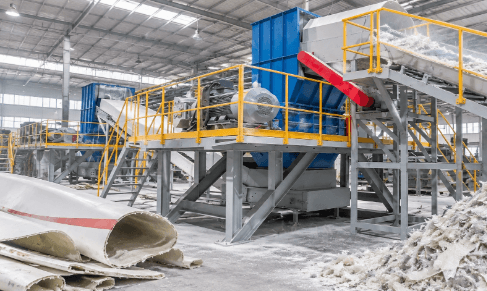
Solving Glass Fiber Dust Hazards and Rapid Blade Wear in End-of-Life Wind Rotor Recycling Plants

E Waste Shredder in South Africa for PCB and Electronic Waste Recycling
High-Capacity Textile Shredding Solutions: From Baled Garments to Clean Shoddy Fiber Opening


 中文


