
Aluminum is one of the most highly prized commodities in the global recycling economy. Because recycling aluminum consumes approximately 95 percent less energy than producing primary aluminum from bauxite ore, secondary smelters and recycling facilities are under immense pressure to maximize scrap throughput. However, scrap aluminum rarely arrives at facilities in an optimized state. From bulky architectural extrusions, discarded alloy wheels, and heavy cast engine blocks to loose manufacturing offcuts and baled used beverage cans (UBS), aluminum scrap is extremely voluminous. If fed directly into melting furnaces, this bulky scrap causes severe thermal inefficiency, massive oxidation losses, and mechanical damage to furnace linings.
Transforming highly ductile, voluminous aluminum scrap into dense, uniform, and pristine fractions requires advanced mechanical size reduction. Unfortunately, aluminum possesses unique physical properties that cause generic high-speed crushers to fail catastrophically through a process known as material galling or cold welding. Deploying specialized industrial metal shredders and heavy-duty shear systems—engineered with low-speed high-torque twin-shaft kinematics, independent planetary gearboxes, anti-smearing blade geometries, and integrated magnetic separation—allows recycling facilities to convert bulky aluminum waste into high-density, smelter-ready fractions. This technical guide examines aluminum rheology, anti-galling shear mechanics, wear-resistant metallurgy, and plant integration layouts for optimizing scrap aluminum recycling operations.
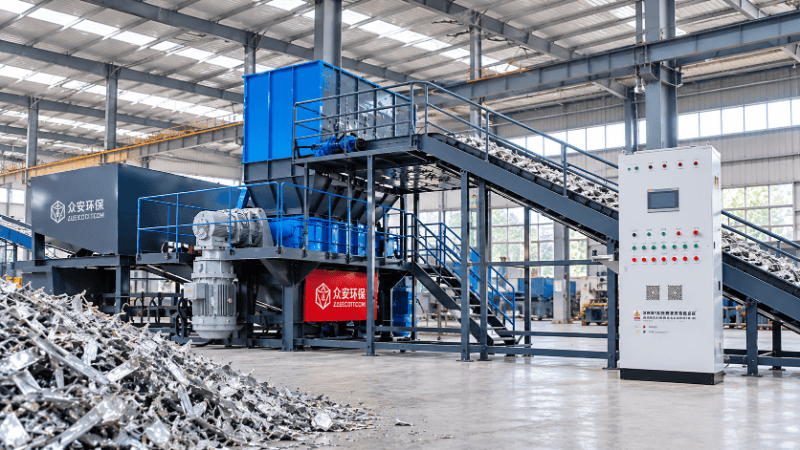
To understand why specialized twin-shaft machinery is mandatory for processing aluminum, plant engineers must analyze the specific physical and mechanical hurdles inherent in non-ferrous scrap streams:
Extreme Ductility and Galling (Cold Welding): Unlike cast iron or hardened steel which fractures cleanly, aluminum is soft and highly ductile. When cut at high speeds, frictional heat causes the aluminum to soften, smear, and fuse directly onto the cutting blades—a phenomenon known as cold welding or galling. This rapidly fills the cutting clearances and stalls the machine.
High Volumetric Bulk and Low Density: Aluminum window frames, profiles, and car panels contain massive amounts of empty space. This low bulk density makes transportation extremely expensive and drastically reduces the melting efficiency of secondary smelting furnaces.
Hidden Ferrous Contamination: Aluminum extrusions and engine blocks frequently contain embedded steel screws, iron hinges, or cast-iron cylinder sleeves. These heavy ferrous tramp elements pose severe impact hazards to generic shredder blades and contaminate the final aluminum melt if not liberated and removed.
Processing tough, ductile aluminum scrap into clean, high-density chunks requires a synchronized mechanical design focused on massive independent torque delivery, precise micro-gap shearing, and automated thermal control:
To completely eradicate frictional heat and material galling, industrial aluminum shredders operate at intentionally slow rotational speeds (typically 10 to 20 RPM). By relying on massive force multiplication rather than kinetic velocity, the cutting disks shear cleanly through ductile aluminum profiles without generating the heat required for cold welding to occur.
Heavy-duty metal shredders utilize two separate, high-power electric or hydraulic motors coupled with high-reduction planetary gearboxes. Each hexagonal rotor shaft operates independently, delivering immense, synchronized rotational torque to pull, crush, and shear heavy aluminum engine blocks and thick cast plates without stalling.
The cutting chamber features specialized, interlocking high-alloy cutting disks. To prevent thin aluminum sheets and foils from folding, wedging, or smearing between the blades, the machine is engineered with absolute micro-gap side clearances. The aggressive hook profiles firmly grip bulky extrusions and pull them downward into the precise scissor-shear cutting zone.
Equipped with real-time amperage monitoring via the central PLC, the machine automatically detects torque spikes when encountering uncrushable solid steel blocks or heavy tramp iron. The control system instantly reverses the rotation of the shafts to reposition the material or clear the obstruction, ensuring continuous, automated operation.
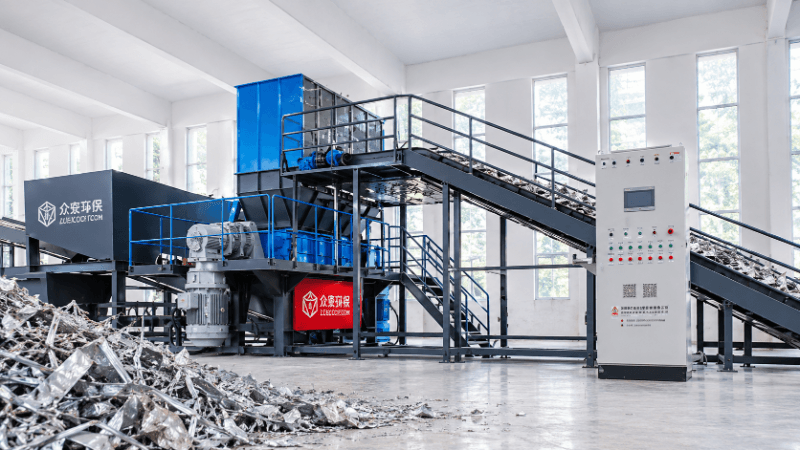
The table below summarizes thermal galling prevention, ferrous tolerance, output density, and operational uptime across generic high-speed crushers versus specialized twin-shaft aluminum shredders:
| Performance Metric | High-Speed Crushers / Hammer Mills | Low-Speed Industrial Aluminum Shredders |
|---|---|---|
| Thermal Galling & Smearing | High-speed friction melts aluminum, causing severe blade galling and rotor binding. | Low-Speed Shear Cutting eliminates heat buildup, ensuring clean metal fracturing. |
| Tramp Ferrous Tolerance | Hidden steel screws and cast-iron inserts shatter high-speed hammers instantly. | High Shock Tolerance shears through embedded steel screws without blade damage. |
| Output Density for Smelting | Produces light, torn, and folded shreds that float on the furnace melt pool. | High-Density Compacted Chunks that easily penetrate the furnace melt surface. |
| Feeding Reliability | Bulky profiles bridge across the hopper, requiring constant manual intervention. | Aggressive Self-Feeding Disks actively pull bulky extrusions into the cutting zone. |
Processing scrap aluminum containing embedded steel fasteners, abrasive road grit, and rigid cast alloys subjects the internal shredder components to intense mechanical stress:
Vacuum-Hardened High-Alloy Tool Steels: Cutting disks are forged from premium high-carbon structural steels and vacuum heat-treated to optimal hardness levels (typically 52-56 HRC). This specific metallurgical balance provides the extreme toughness required to absorb impact shock from tramp steel while maintaining a sharp edge to shear ductile aluminum.
Replaceable Cleaning Fingers (Spacer Combs): To prevent sheared aluminum rings or curved extrusions from wrapping around the rotor shafts, stationary cleaning fingers aggressively scrape the spaces between the cutting disks, forcing the shredded material downward and keeping the rotors completely clear.
Heavy-Duty Outboard Bearings: Spherical roller bearings are housed externally in split plummer blocks, separated from the cutting chamber by heavy labyrinth seals to completely block fine aluminum dust and industrial fluids from contaminating the lubrication system.
A high-performance secondary aluminum recycling facility integrates twin-shaft shredders into a continuous, automated material recovery line:
Stage 1: Bulk Scrap Reception: Loose aluminum extrusions, alloy wheels, manufacturing scrap, and engine components are loaded via heavy apron conveyors or grapple cranes into the shredder hopper.
Stage 2: Primary Shear Reduction: The low-speed twin-shaft shredder aggressively fractures and shears the bulky scrap, breaking structural shapes down into high-density, uniform chunks (typically 50 mm to 150 mm) and physically liberating attached steel screws or iron inserts.
Stage 3: Ferrous Separation and Smelter Delivery: The shredded material passes under a powerful cross-belt overband magnetic separator. Liberated ferrous tramp metal is extracted and deposited into separate bins, leaving a pristine, high-density, ferrous-free aluminum fraction that maximizes efficiency and minimizes slag in downstream melting furnaces.
Successfully transforming bulky, ductile scrap aluminum into high-value, smelter-ready fractions requires moving away from generic crushing equipment toward specialized low-speed mechanical engineering. Deploying industrial metal shredders—engineered with independent dual-motor planetary drives, anti-galling micro-gap cutting disks, low-speed torque multiplication, and intelligent overload protection—solves the persistent industry bottlenecks of material smearing, thermal binding, and low furnace density. This robust engineering approach ensures exceptional operational uptime, superior ferrous liberation, and maximum smelting efficiency for modern aluminum recycling operations worldwide.
Textile Waste to RDF Production Line: How to Turn Textile Waste into Alternative Fuel?
Solving Glass Fiber Dust Hazards and Rapid Blade Wear in End-of-Life Wind Rotor Recycling Plants

E Waste Shredder in South Africa for PCB and Electronic Waste Recycling
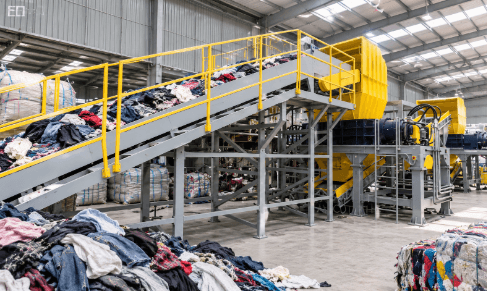
High-Capacity Textile Shredding Solutions: From Baled Garments to Clean Shoddy Fiber Opening


 中文


